Showing posts with label homeland security. Show all posts

Monday, March 05, 2012

San Diego Native with the U.S. Border Patrol to Accept Prestigious CBP Team Award

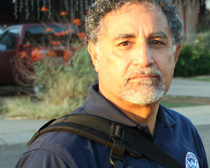
San Diego — Gerald Wilke, an Assistant Chief Patrol Agent (ACPA), with U.S. Customs and Border Protection (CBP), U.S. Border Patrol, San Diego Sector, has been designated to represent team members and receive the CBP Mission Integration Award on their behalf. This award recognizes an important and successful team effort that demonstrates a cross-organizational approach when developing and implementing a solution to address a significant problem. ACPA Wilke will be presented with the award by the CBP Commissioner at the annual CBP 2012 Awards Ceremony today, in Washington D.C.

ACPA Wilke was a team member comprised of high level managers from a diverse group of San Diego based federal agencies formed to collaboratively address the increasing use of the maritime environment by criminal organizations as a method to smuggle drugs and people into the country.

The maritime domain is a high-risk environment that poses significant danger of death and serious injury to human life. Maritime smuggling vessels are often overloaded and not seaworthy. Maritime smuggling generally occurs at hours of darkness and vessel operators rarely use required safety equipment. Maritime vessel operators often intently smuggle during inclement weather and hazardous sea state to evade detection. The team successfully created and implemented a consequence delivery strategy specific to the San Diego region called the Maritime Safety Initiative (MSI) designed to prevent this unsafe and illegal maritime smuggling activity.

Under MSI, all illegal maritime migrants are formally removed, informed of the consequences of re-entering through the maritime domain, and then transported outside of the California corridor to be repatriated to Mexico. Maritime migrants that choose to illegally re-enter through the San Diego maritime domain are referred for prosecution for felony re-entry after deportation. Maritime smugglers are also targeted by the U.S. Attorney's Office for prioritized criminal prosecution.

ACPA Wilke said, “Each team member greatly contributed to the success in the creation, implementation, and execution of the Maritime Safety Initiative with a primary focus to promote the preservation of life at sea and the enforcement of U.S. laws.” He added, “The Maritime Safety Initiative demonstrates what can be accomplished when agencies work together and share resources to accomplish a common goal."

After the implementation of the MSI during Fiscal Year 2011, maritime smuggling trends have significantly decreased as witnessed by a reduction in maritime apprehensions from 867 apprehensions in fiscal year 2010 to 631 in fiscal year 2011.

ACPA Wilke will accept the CBP Mission Integration Award on behalf of team members Mark V. Dunbar with the U.S. Border Patrol, William P. Snyder and John E. Garzon with the Office of Field Operations, William Raymond, with the Office of Air and Marine, Michael P. Carney, with Immigration and Customs Enforcement, Michael Wheat, with the Assistant United States Attorney Office and Patricia L. Hill, with the United States Coast Guard.

Gerald, a San Diego native, served in the U.S. Army 82nd Airborne Division and Special Forces from 1980 through 1984 and later attended San Diego Mesa College. In 2010, he successfully completed a CBP Command Leadership Academy. Gerald has worked for the U.S. Border Patrol since 1986.

U.S. Customs and Border Protection is the unified border agency within the Department of Homeland Security charged with the management, control and protection of our nation's borders at and between the official ports of entry. CBP is charged with keeping terrorists and terrorist weapons out of the country while enforcing hundreds of U.S. laws.

Saturday, November 05, 2011

Phoenix's community relations officer brings people together

Whether a police officer or active community member, learn from the best leadership book to become a leader like Rudy Bustamante!

If anyone knows Phoenix, it's Rudy Bustamante. He's spent his entire life there, serving in community roles ranging from police detective to school board member. When U.S. Immigration and Customs Enforcement (ICE) was looking for a community relations officer for the Phoenix area, Bustamante was the perfect fit. Two years into the position, he works tirelessly to educate advocacy groups, schools, neighborhoods, and local law enforcement agencies about ICE.

"People are totally surprised at what we do," he said.

It's a common misconception that ICE focuses only on immigration. While that's part of the agency's mission, ICE also serves as the largest investigative agency in the Department of Homeland Security. ICE Homeland Security Investigations (HSI) agents enforce customs laws, conduct drug and human smuggling investigations, detect financial fraud, and more.

"Rudy is able clear up miscommunication about what each federal agency's role is," said Michael Nowakowski, a Phoenix city councilman. "Rudy has helped bring the community together and understand the role of ICE. Everyone wants to lock up bad people. If you're smuggling human bodies across the border, you're going to jail. No one wants to have a human smuggler next door."

Like Nowakowski, people want to know what's happening in their communities, especially when ICE is involved.

"I'll call my contacts from my cell phone from the scene when we execute a search warrant. That provides them with an idea of what's going on, and they appreciate that," said Bustamante.

 You'll also find Bustamante making presentations at schools and meeting with advocacy group leaders at local coffee shops. He considers in-person meetings to be of great importance because that's how he builds rapport and trust with the local community.

 During those interactions, he uses the Steven R. Covey quote, "Seek to understand; then to be understood," as a guiding principle.

In order to be effective, "You must first listen. Then, you can share what you have to offer and how you can help out," said Bustamante. "ICE employees are part of the community. They work here, go to school here. They have a vested interest in keeping your community safe."

Thursday, October 27, 2011

Border Patrol Agent Receives Prestigious Award

Become a police leader like Agent Dikman! Learn from these police leadership books written by real police who rose to leadership positions.

NAU Honors Sabri Dikman as Distinguished Citizen of the Year

Tucson, Ariz. – The “Dr. Cliff Harkins Distinguished Citizen of the Year Award” was presented to current Branch Chief of Operations for the Joint Field Command-Arizona during a ceremony at the NAU Homecoming football game held at the Walkup Skydome in Flagstaff on October 22.

Sabri Dikman was honored by the Northern Arizona University Alumni Association for his “exemplary service to community and strong leadership” for his tenure as deputy patrol agent in charge of the Nogales Station throughout 2010.

 “I am truly honored to be named the 2011 recipient of the Cliff Harkins Distinguished Citizen of the Year award” said Dikman “This honor brings the hard work of the men and women of the Border Patrol especially those assigned to the Tucson Sector, and more specifically the Nogales Station, into the public light.”

The Distinguished Citizen of the Year Award was established in 2002 to recognize individuals working for nonprofit organizations; governmental assignments at the municipal, county, state or federal level; or other outstanding service as a citizen.

In June of 2010, Dikman assumed the role of interim Assistant Patrol Agent in Charge of the Nogales Station, the largest and one of the busiest stations in the United States. His interim status was made permanent in October 2010. Two months later, on Dec. 7, he was promoted to Acting Patrol Agent in Charge of the Nogales Station; a position he held until July 2011.

Dikman was nominated for the award by R. Alan Booth, then Branch Chief of Operations for Joint Field Command-Arizona. He said Dikman led his men and women through a tragic and challenging time shortly after taking charge when Border Patrol Agent Brian Terry was murdered.

Booth wrote in his recommendation that Dikman ensured every resource was effectively applied to facilitate the investigation and bring the responsible parties to justice. At the same time, Dikman ensured his other employees received emotional support. “The hallmark of his leadership was demonstrated in the selfless way he lead his team through the worst possible circumstances any law enforcement family can encounter,” said Booth.

Under Dikman’s leadership, according to Booth’s recommendation, the Nogales Station significantly reduced illicit cross border traffic by acquiring much-needed additional resources, personnel and key technology. Through his leadership and vision, these resources were deployed to maximize efficiency and create an optimum enforcement posture.

Booth said he has been Dikman’s colleague for several years and has come to know him on and off duty. “Aside from working 12-hour days to secure the Nation’s border,” said Booth, “he also engaged the Nogales community by regularly meeting with a community advisory board, comprised of key stakeholders and influential residents, to ensure the best possible relationship between the Border Patrol and local residents.”
U.S. Customs and Border Protection is the unified border agency within the Department of Homeland Security charged with the management, control and protection of our nation's borders at and between the official ports of entry. CBP is charged with keeping terrorists and terrorist weapons out of the country while enforcing hundreds of U.S. laws.

Wednesday, October 12, 2011

CBP Field Operations at Port of Brownsville Graduates Second Citizen's Academy Class

Only well-respected community leaders make it to the Citizen's Academy. Check out the best leadership book and learn how to be like them!

Brownsville, TX – On October 6, Michael Freeman, Port Director, U.S. Customs and Border Protection Brownsville Port of Entry announced the graduation of a second class of the CBP Field Operations Brownsville Citizen’s Academy. 

The CBP Field Operations Brownsville Citizen’s Academy is part of a continuing aggressive plan by Port Director Freeman to foster a better working relationship with the communities in which officers live and work.

The eight-week course provides class participants with a better working knowledge and understanding of CBP.

The academy consists of a series of classroom discussions and several hands-on scenarios. The citizen’s academy is a field training that was held once a week on Wednesday evenings for eight weeks.

The BCA continues to create a better understanding, improves communication, and helps solidify a better partnership between the citizen academy participants and CBP through education. Brownsville Port of Entry Citizen’s Academy graduates have assisted us in identifying potential problems and solutions to border issues.

This second Brownsville Citizen’s Academy graduating class consisted of members from throughout the community. Represented in this academy class were members from the following organizations:

U.S. Consulate, Matamoros: Andrew Crosson, Jennifer Nilson and Jeremy Monks
Mexico Consulate, Brownsville: Raul Gomez and Efrain Hernandez Parra
Mexico Customs: Zaida Villarreal Snyder and Hector Eduardo Castillo
Brownsville & Rio Grande Railroad: Norma Torres and Eric Hinojosa
Union Pacific Railroad: Fernando GarzaZ
Port of Brownsville: Antonio Rodriguez

“Participants of our Citizen’s Academies will assist us in getting our message out into the communities. I applaud these academy participants for attending each session and getting a first-hand, hands-on, behind-the-scenes look into the CBP mission on the frontlines,” said Michael Freeman, CBP Port Director, Brownsville port of entry.

U.S. Customs and Border Protection is the unified border agency within the Department of Homeland Security charged with the management, control and protection of our nation's borders at and between the official ports of entry. CBP is charged with keeping terrorists and terrorist weapons out of the country while enforcing hundreds of U.S. laws.

Wednesday, April 20, 2011

Del Rio Border Patrol Agents Honored for Actions

Del Rio, Texas -- Four agents of the Uvalde Border Patrol station were recently presented the Top Blue Eagle award in recognition of their hard work, dedication, leadership, and their exemplary law enforcement efforts during 2010. U.S. Customs and Border Protection Commissioner Alan D. Bersin officiated at the CBP Annual Awards Ceremony at CBP headquarters in Washington, D.C. on March 25.

Top Blue Eagle Award recipients, from left: Field Operations Supervisor Jason Penney, Border Patrol Agent Jason Coy, Border Patrol Agent Na’eem Williams, and Supervisory Border Patrol Agent Frank Curtis

Field Operations Supervisor Jason Penney, Supervisory Border Patrol Agent Frank Curtis, Border Patrol Agent Jason Coy and Border Patrol Agent Na’eem Williams were presented with the 2010 Commissioner’s CBP Top Blue Eagle Award in recognition of their involvement of a vehicle stop performed last September near Batesville, Texas.

Record checks revealed that the driver had a previous arrest for first degree aggravated sexual assault of a child and was out on bond. Agents also discovered that the passenger was an unrelated minor female, and that they did not know each other.

Under the direction of the Border Crimes Prosecutor, Bethany Stephens, the Zavala County sheriff’s office took custody of the subjects for further investigation. These four agents were commended for their efforts, perseverance, and diligence. A sexual predator was removed from the streets.

U.S. Customs and Border Protection is the unified border agency within the Department of Homeland Security charged with the management, control and protection of our nation's borders at and between the official ports of entry. CBP is charged with keeping terrorists and terrorist weapons out of the country while enforcing hundreds of U.S. laws.

Tuesday, March 08, 2011

Leadership Journal joins The Blog @ Homeland Security

We thank you for your loyal readership of the Leadership Journal; our online forum discussing policy issues from the perspective of the Department’s senior leadership.

Starting today, we will be combining the Leadership Journal and The Blog @ Homeland Security to form one unified blog for The Department of Homeland Security.

On The Blog @ Homeland Security, readers can still expect to see blog posts directly from the Secretary and senior leadership, as well as feature stories from across the Department, all in one convenient location. 

We encourage and welcome your thoughts and comments on The Blog (http://blog.dhs.gov).

This page lives as a standing archive of the Leadership Journal.   Here you will find all of the content published on the Leadership Journal from its beginning in September 2007 to the latest post in January 2011.  Long term, the Leadership Journal will be permanently archived and the URL http://journal.dhs.gov/ will discontinue.

Right now, you can still view any past Leadership Journal entry, each with its original comments still intact.

Please note that the e-mail subscriber list for Leadership Journal will discontinue.  We encourage you to sign up for the e-mail subscriber list on The Blog to receive the latest news and updates from the Department.

Saturday, February 26, 2011

Director, Domestic Nuclear Detection Office: Warren M. Stern

Mr. Stern is the Director of the Domestic Nuclear Detection Office (DNDO), a position he has held since August 2010.   Prior to joining DNDO, Mr. Stern served as the Head of the International Atomic Energy Agency’s (IAEA) Incident and Emergency Centre from August 2006 to March 2010—where he led international efforts to prepare for and respond to nuclear and radiation emergencies and helped create the IAEA’s Response Assistance Network.

Mr. Stern began his career in 1985 at the Central Intelligence Agency, then served as the Senior Technical Advisor in the U.S. Arms Control and Disarmament Agency—where he advised senior U.S. officials on nonproliferation and nuclear security issues—from July 1990 until May 1999.

He later served as a Fellow in Senator Hillary Clinton’s office in 2003—providing guidance on nuclear energy, waste, safety and security issues and helping to write the Dirty Bomb Prevention Act—and went on to serve as the Department of State’s Senior Coordinator for Nuclear Safety and Deputy Director of the Office of Nuclear Energy, Safety and Security. 

Mr. Stern received his M.S. in National Security Studies from the National War College, his M.S. in Nuclear Engineering from the Massachusetts Institute of Technology, and his B.A. in Physics from Brandeis University.

Tuesday, September 21, 2010

Common Misunderstandings May Harm Disaster Survivors

DOWNERS GROVE, Ill. -- In the first few weeks following a disaster, residents may be confused or misled by rumors and half-truths about how to get help from the various assistance programs that are available.

While state and federal programs are not intended to make storm survivors whole, they can provide the kinds of assistance that helps those affected by the summer storms to begin the recovery process.

Officials of the Illinois Emergency Management Agency (IEMA) and the U.S. Department of Homeland Security’s Federal Emergency Management Agency (FEMA) point to two easy ways to begin the recovery process:

•Go to www.disasterassistance.gov to apply for disaster assistance from FEMA, or
•Call 1 800-621-FEMA (3362) or TTY 1 800-462-7585. Phone lines are available from 7 a.m. to 10 p.m., seven days a week. Multilingual operators are available.
Following are clarifications of some common misunderstandings about disaster assistance and answers to some frequently asked questions:

I got help from the American Red Cross, but I still need to apply to FEMA if I need assistance.
TRUE. FEMA programs are different from the emergency food, clothing and shelter initially provided by the American Red Cross, Salvation Army and other voluntary agencies. Registration with the Red Cross or other voluntary agency is not the same as applying with FEMA.

I have insurance. I hear there may be other help available to me.
TRUE. Insurance is your main source to cover emergencies or to put your life back in order after a disaster. But there are some things that insurance may not cover. That is where federal disaster programs may be able to help.

I have to wait for my insurance adjuster before I apply for disaster assistance.
FALSE. You do not have to wait for an agent or adjuster's inspection before applying for assistance or beginning repairs needed to make your house safe, sanitary and functional. If you wait, you could miss the deadline to apply to FEMA. However, if you have insurance, you must file an insurance claim, find out what your policy covers, and be sure to keep papers and receipts for any work done. If you still have unmet disaster-related needs, you may be considered for FEMA assistance. To avoid a duplication of benefits, please submit your insurance settlement or denial documents to FEMA along with an appeal letter.

I already repaired my home, so it is too late to apply.
FALSE. You may be eligible for FEMA assistance for expenses not covered by your insurance.

I have to make a reservation and go to a Disaster Recovery Center (DRC) to apply for assistance.
FALSE. There are two ways to apply for assistance. Individuals with Internet access can apply on the agency's website at www.disasterassistance.gov. You may apply by calling FEMA's toll-free number at 1 800-621-FEMA (3362) or TTY 1 800-462-7585 from 7 a.m. to 10 p.m., seven days a week. DRCs are designed to provide additional information or assistance. No appointment is necessary and you may visit any DRC even if it is not located in your town or county.

I have already applied to FEMA for assistance; there’s no reason for me to go to a DRC.
FALSE.  You can meet face-to-face with FEMA disaster recovery specialists. Other federal and state disaster recovery information is available in the centers. SBA customer service representatives are available to answer questions about the SBA low-interest disaster loan program and assist with the completion of loan applications that are essential to the FEMA application process.

I have to be poor to qualify for disaster assistance.
FALSE. Federal and state disaster assistance programs may be available to those who suffered damage, regardless of income. The programs are not "welfare." The kinds of help provided depend on the applicant's circumstances and unmet disaster-related needs.

I can apply for a loan from the SBA even if I'm not a business owner.
TRUE. Renters, homeowners and private nonprofit organizations—as well as businesses—may be eligible for low-interest loans for disaster-related losses. Homeowners may be eligible for damages to real estate. Homeowners and renters may be eligible for personal property damages, including automobiles. Don't let the name fool you. In a Major Presidential Disaster Declaration, the SBA is the primary source of federal financial assistance.

I have to be turned down by my bank before I can apply for a disaster loan.
FALSE. The U.S. Small Business Administration (SBA) handles low-interest disaster loans and has its own criteria for determining each loan applicant's eligibility. If you, as a homeowner or renter, do not qualify for an SBA loan, you may be eligible for referral to FEMA for other assistance. It is necessary for homeowners and renters to return the SBA application, if one was received, to be eligible for referral back to FEMA.

I don't really want a loan, but I've heard I need to fill out the SBA loan application.
TRUE. If you do not qualify for a loan, you may be considered for other forms of assistance from FEMA designed to help meet serious, disaster-related needs. However, you must complete and return the SBA loan application, even if you don’t want a loan. If the loan application is not returned you may not be eligible for further disaster assistance.

I rent an apartment, so I can't get help to replace my damaged personal property.
FALSE. A renter may also qualify for a grant from FEMA or an SBA low-interest disaster loan to replace personal property. One type of grant may cover temporary housing needs. Another type of grant may be available to an eligible individual or families with serious disaster-related needs and expenses that are not covered by insurance or other disaster assistance programs.

I have to be a legal U.S. resident to receive Individual Assistance.
TRUE. To be considered for federal assistance from FEMA, you must be a U.S. citizen, a qualified alien or a non-citizen national. A qualified alien generally includes individuals who are lawful permanent residents (possessing an alien registration receipt card) or those with legal status due to asylum, refugee, parole (admission into the U.S. for humanitarian purposes), withholding of deportation, or domestic violence. Check with an immigration expert if you have questions about your legal status.

I am an undocumented immigrant, is there any assistance available?
POSSIBLY. You may apply for Individual Assistance on behalf of your child who is a U.S. citizen or a qualified alien. Or another adult household member may qualify for household assistance if he or she is a documented immigrant. You may also be eligible under many different programs run by state and local agencies and voluntary agencies for various types of cash assistance. An undocumented immigrant may be eligible for short-term, non-cash emergency aid provided by FEMA.

I have applied, what happens next?
After you apply, FEMA will mail you a copy of your application and "Help After a Disaster: Applicant's Guide to the Individuals and Households Program," a useful booklet that will answer many of your questions. This publication explains how FEMA's disaster assistance program works; and describes additional kinds of help you may qualify for from other federal, state and voluntary agencies.

If your home or its contents are damaged and you are uninsured or underinsured, an inspector may contact you within 10 days after you apply to schedule a time to meet you at your damaged home. All inspectors carry a photo ID that shows they are affiliated with the U.S. government. If you receive an SBA Disaster Loan application in the mail, you must complete and return the application to the SBA to be considered for a loan and to continue the referral and eligibility process.

I need to check the status of my case.
Go to www.disasterassistance.gov or call the FEMA Helpline at 800-621- FEMA (3362) or (TTY) 800-462-7585.

FEMA's mission is to support our citizens and first responders to ensure that as a nation we work together to build, sustain, and improve our capability to prepare for, protect against, respond to, recover from, and mitigate all hazards.

Friday, September 10, 2010

Remarks as Prepared by Secretary Napolitano to New York City First Responders

New York, New York
NYC Emergency Operations Center
(Remarks as Prepared)
“Rebuilding the Foundations for America's Hometown Security”

A New Framework for Security

Good morning. And thank you, Commissioner Bruno, for that introduction. It’s always great to be back in New York City. And thank you NYPD Commissioner Ray Kelly; FDNY Commissioner Salvatore Cassano; FDNY Chief of Counterterrorism Joseph Pfeifer; FDNY Chief of Operations Robert Sweeney; and also NYC Transportation Commissioner Janette Sadik-Khan.

In addition to being born here, coming to New York at this time, on this date, and having the honor of speaking with first responders and law enforcement officials such as yourselves, has a special significance for me. And of course, this Office of Emergency Management, built after the old one was destroyed on 9/11, is a good example of the kind of resilience and determination that New Yorkers are known for.

This date and this place are also vivid reminders of why we have a Department of Homeland Security. Tomorrow, each of us in our own way will remember that day – the heroism of the first responders like you – and the thousands of lives lost when we were attacked.

I know that for some of you here this morning, these memories are all too real. You were among the policemen, firemen, and emergency personnel who ran toward the Towers as they were burning so that you could save others. Some of you stayed in the days and weeks ahead, working on the pile – memorializing those who were gone. All of you lost colleagues, friends, loved ones. Every American joins you in mourning those we lost – here in New York, at the Pentagon, and in Pennsylvania.

So tomorrow is also a reminder that each of us bears a unique sense of responsibility to one another, to our communities, to our states, and to our nation. Whether you are a police officer on the street, a firefighter, a doctor, a businessman, a student, or a stay-at-home parent, you – we – are the very backbone of our nation’s homeland security. We are all interconnected in the effort to protect this country.

Right around this time last year, I gave a speech at the Council on Foreign Relations here in New York where I described a new framework for how we’re approaching homeland security. It didn’t involve a complex restructuring of DHS or big, flashy new programs. In fact, we streamlined operations, prioritized efficiency, and organized ourselves around our core missions.

Our starting point was the idea of interconnectedness and mutual responsibility. The question we kept asking was: “how can we do a smarter and better job of broadening the collective mission of protecting the homeland?” And our answer was this: we do it by seizing every opportunity to build a bigger and stronger security team and then equipping that team to succeed.

Therefore, over the past year and a half, I have made one of my very top priorities for DHS to get information, to get tools, and to get resources out of Washington, DC, and into the hands of the men and women serving on the front lines. That includes you – the first responders – but it also includes citizens, community groups, and our partners in the private sector.

This may not generate big headlines. But this hometown-centric approach has a big impact on our ability to be effective – and more important – to support you in the field.

The approach I outlined last year is bigger than just one Federal department, even a huge one like DHS. And putting into practice the notion that homeland security begins with hometown security, frankly, has implications for us all.

I said in that speech last year that we had an “urgent need to refocus our counter-terror approach to make it a shared endeavor to make it more layered, networked, and resilient – to make it smarter and more adaptive.” I said we needed to enlist a broader societal response to the evolving threats we’re facing – and that requires strengthening partnerships, and focusing on values like resilience and shared responsibility. And I said that individuals, families, communities, and businesses all have important roles to play.

This represents a shift for our country. In a sense, this harkens back to when we drew on the tradition of civil defense and preparedness that predated today’s concerns. In another way, however, it makes all of us responsible for being informed about the kinds of Twenty-First Century threats we face today.

Building a culture of preparedness and resilience across the country is a significant endeavor. And it is, indeed, still a work in progress. But I'm here today – a year later – to say that we have made progress. And we need to be making progress because the myriad threats against our nation have not gone away.

Indeed, they have grown even more dynamic. So, I want to share that progress with you, and let you know what I see coming down the road for us.

Supporting the Front-Lines: Law Enforcement, First Responders

As first responders, you are the critical link in our nation’s security and preparedness. You are often the first to identify a potential threat or recognize a larger trend that you’re seeing in your communities. In a way, you are “first preventers” as well as first responders. And we have a responsibility get you the kind of tools and training you want and need to do your job.

The old view that “if we fight the terrorists abroad, we won’t have to fight them here” is just that – the old view. It is abundantly clear that we have to fight them abroad, we have to fight them at home. We have to fight them, period. And you are as squarely in that fight as I am.

Accordingly, I felt that the Department needed to do more to support you, and also to do more to engage the private sector as partners in this effort. And, indeed, I felt we needed to do more to inform and empower citizens and communities to be the enormous assets they can be before, and during, a crisis or emergency.

Fusion Centers

We are doing exactly that, starting with strengthening the networks and relationships needed to get information where it should to be, when it should be there, and in the most useful format. And we’re backing it up with historic deployments of personnel, technology, and resources.

At the heart of this are fusion centers. Starting with just one in 2006, there are now 72 fusion centers nationwide, serving as focal points for information-sharing among federal, state, local, tribal, and territorial partners.

By the end of this year, all 72 fusion centers should be able to analyze information and spot trends in order to effectively share timely intelligence – with local law enforcement, and with DHS, so the information can also be used by others within the Intelligence Community.

To support this vision: we’re prioritizing fusion centers in our FY2011 grants, and looking for ways to support them through additional technology and personnel, including the deployment of highly-trained experts in critical infrastructure; we’re deploying experienced DHS analysts to every one of these centers – 64 at last count – and we won’t stop until we have them in every one; and we're linking them together, and with DHS headquarters, through the classified Homeland Security Data Network.

During the last two years, we’ve seen numerous threat streams, and we’ve also seen the increased role of Westerners, including U.S. citizens, engaged in terrorist training, planning, and attempted attacks. We’re seeing more – and more sophisticated – use of violent extremist messages by U.S.-born, English speakers who are operating abroad, and exploiting the Internet and social media tools. And in some of the domestic plots we’ve uncovered, such as the case of Najibullah Zazi, we’re seeing the kind of planning – like purchasing pre-cursor chemicals from beauty supply stores for making bombs – that rely on alert citizens and local authorities to detect.

Given this kind of threat environment, we believe strongly in the importance of strong partnerships at the local level. Indeed, in the Zazi plot to bomb the New York Subway, it was a fusion center near Denver that played the key role in “fusing” information that came from the public with evidence that came in following the suspects’ arrest by the FBI.

Grants

There’s another important way we are pushing tools and resources out of Washington, D.C., and into local hands. Since 2003, DHS has awarded more than $31 billion in grants, including $3.8 billion for FY2010 for states, cities, law enforcement, and first responders.

This Administration is also directing almost $3 billion in Recovery Act funds to critical security efforts, including major increases in explosive detection and checkpoint screening equipment, as well as grants to rebuild fire stations, port, and other security facilities, and creating good jobs along the way.

I know this is a difficult time for a lot of communities across America. We’re slowly emerging from the worst recession we’ve seen in decades. And our cities, states, and counties are dealing with some really tough budgets. As a former two-term Governor, I know what these hard choices look like. So to help ease that burden, we're approaching grants in a whole new way, focusing on how states and locals can stretch these dollars further.

Over the past year, I eliminated red tape by streamlining the grant process and expanded what grants can be used for, such as maintenance and sustainability, which enables local jurisdictions to continue to support previous investments rather than buying new equipment or technology each year.

We’ve also supported fire departments across the country by making it easier to put these security dollars to work quickly, to rehire laid-off firefighters and to retain current forces. And we waived the local match requirement, the salary cap, and retention requirements to give fire departments – like the Fire Department of New York – more flexibility to protect the jobs of veteran firefighters.

Countering Violent Extremism

To counter violent extremism right here at home, I announced a series of initiatives last month to support state and local law enforcement and community groups across the country in identifying and reducing threats from violent crime and terrorism.

These include: a new community-oriented policing curriculum for state and local law enforcement, focused on enabling frontline personnel to identify indicators of terrorism and other threats; unclassified case studies examining recent incidents involving violent crime and terrorism to educate and inform state and local law enforcement personnel and about common behaviors and indicators exhibited by suspects; and intelligence products focused on the tactics, techniques and plans of international and domestic terrorist organizations to better inform state and local law enforcement personnel about threats facing the homeland and their local communities.

I recognize that no Cabinet Secretary or Federal department has a monopoly on good ideas. That’s why I based these efforts on recommendations from my Homeland Security Advisory Council, and its “Countering Violent Extremism” Working Group, comprised of chiefs of police, sheriffs, community leaders and homeland security experts.

Throughout this work, we are involving, and working closely with, religious, ethnic, and community organizations, including leaders from the Muslim, Arab, Sikh, and South Asian communities, many of whom have already been critical in thwarting violence. Members of these communities play enormously positive roles in enriching our national life. And like all Americans, they seek to protect and defend our nation, and our way of life.

Fielding a Bigger Team: Individuals, Communities, Private Sector

We’re taking other steps to support individuals and families, citizens and communities. Recall that it was a New York street vendor who tipped off a policeman about the bombing attempt in Times Square. It was a group of passengers on Flight 253 who intervened to stop the bombing attempt on Christmas Day.

Making individuals and citizens better informed and empowered is crucial, and DHS has therefore launched, and is expanding, a national campaign around a slogan you probably know well: “If You See Something, Say Something.” This campaign was first implemented by New York City's Metropolitan Transit Authority, with support from DHS. The MTA has achieved some real success with the campaign, and they have been very generous in working with us to bring it to a wide range of venues.

We’re producing new signs, PSAs, videos, and other materials that you'll see in a number of different settings. We’ve expanded the campaign to additional transit systems, starting with Amtrak, and you can see posters in train stations across the country, and in trains along the Northeast Corridor. We’ve just launched the campaign in the National Capital Region. And I was recently in Nashville to announce its expansion to six southern states.

We’re also working with professional and collegiate sports leagues, launching this effort at stadiums across the country this fall. As a matter of fact, we have “If You See Something, Say Something” posters and banners hanging at the U.S. Open. The goal of the “If You See Something, Say Something” campaign is making people more aware, but also providing them with the tools they need to take action if they see something suspicious.

Through this campaign, we’re raising awareness of potential terrorist tactics, and emphasizing the importance of reporting suspicious activity to law enforcement. But that’s just one side of the equation. We also see it as a partnership between citizens and local police.

To that end, we’re also expanding the National Suspicious Activity Reporting, or SAR, initiative into a greater resource for front-line security personnel. The National SAR initiative creates a standard process for law enforcement in over two dozen states and cities to identify and report suspicious activity so it can be shared nationally to identify broader trends. We’re working with our partners in the Department of Justice, which runs SAR, and widening it to include fusion centers, transit police, and other groups.

I should say that increasing awareness among the general public is not limited to countering terrorism. We’re in the middle of National Preparedness Month, and, of course, it’s also Hurricane season. Our FEMA colleagues are busy educating people about all kinds of natural disasters, as well as responding to floods, hurricanes, and other crises.

So, in addition to our security efforts, we’re urging all Americans to visit Ready.gov – and the Spanish-language listo.gov – to take basic steps to prepare for any kind of a crisis. We’re talking with Americans using the tools that they already use in their everyday lives. Across DHS, we’re sharing information via blogs, Twitter feeds, and other social media tools.

In fact, FEMA has jumped to the fore by launching a highly-touted mobile site for smartphones and other hand-held devices. Through this mobile FEMA application, you can track the latest weather forecasts in your area, and if you live in an area prone to wildfires, hurricanes, floods, or other natural disasters, you can get information on how to prepare, and what to do in a crisis. You can even apply for assistance from FEMA right from your smartphone.

All of these tools are designed to get information into the hands of individuals so they can help build stronger, more resilient communities. On this last point, businesses big and small really can be a strong partner in our nation's security.

Here's one example: I just mentioned sports, and in addition to expanding the “If You See Something, Say Something” campaign to large public events, I’ve met with the commissioners and security directors for all the major sports leagues, and asked them to work with us to help make their arenas and stadiums more secure.

This is leading to some very promising joint efforts. For instance, DHS has a team with expertise on protection and resilience that, since May, has been visiting with owners and operators of all the big sports venues, and we're closing in on 300 sites.

Fostering Greater Resilience

We’re also taking important steps to help our state and local partners strengthen the resilience of their infrastructure, computer networks, and of their communities and citizens – and strengthening the ability for our systems, our cities, our towns, and our country to bounce back quickly from an attack or a natural disaster, and to be even stronger than before.

We’ve been looking at a number of ways to create incentives to foster this kind of resilience. In the coming days, we’ll be releasing details of a new national award that will recognize people, organizations, or communities who have exhibited an extraordinary commitment to resilience.

We have produced what we call a Community Resilience Registry where communities can input information on roughly a hundred different data points to develop a “resilience profile” of their community.

We’re also prioritizing resilience in some of our key FY2011 grant programs, including inserting language into our grant guidance to encourage applicants to consider strategies for increasing resilience at the local level.

Conclusion: Strength

America is a strong nation. And we are a resilient nation. But that doesn't mean that we don’t have to examine and recommit to the sources of that strength and resilience from time to time.

As I’ve said before, we can’t guarantee there won’t be another successful terrorist attack. The threats we face are evolving, and enemies like al Qaeda and its affiliates are determined. We can’t seal our country under a glass dome.

But if that attack comes, our enemies will still not have succeeded, because our nation is too strong, and too resilient, to ever cower before a small group of violent extremists. We have always rebounded from hardships and challenges, and come together as a people to overcome disasters, attacks, and war. And we will do so again.

Today, on the eve of the ninth anniversary of the worst terrorist attack in our nation’s history, I can pledge to you this: we will do everything in our power to prevent attacks, and to prepare ourselves. At DHS, a fundamental part of that obligation is to get information, tools, and resources into the hands of people who can use them to help all of us be more secure.

To field that bigger team – to enlist individuals, local communities, businesses, law enforcement and first responders in a network of shared responsibility – to enlist the nation in its own collective security. It’s the American way: because we all face the threats of today’s world, as well as the opportunities it brings, we’re all in this together.

With your help, DHS will keep supporting those of you on the front lines, and keep strengthening the networks that will keep us secure. We’ll all build, and be part, of a bigger, smarter, stronger team. And that’s how we'll keep America safe.

Saturday, May 17, 2008

Contemporary Leadership Issues

This seminar will help you keep abreast of evolving challenges and administration initiatives involving Federal managers across the Government. You will learn what is most relevant and at the cutting edge in Government management and organizational leadership. An expert author on current leadership and Federal management issues will moderate discussions and answer your questions. Publications are provided in advance to allow you to read, reflect, and develop questions.

A cornerstone of this seminar is a comprehensive review of current administration initiatives. Topics range from the President’s Management Agenda to the latest thinking on succession planning,
homeland security, and national defense.

More Information
http://www.leadership.opm.gov/Programs/Policy-and-Initiatives/CLI/Index.aspx

Friday, May 25, 2007

Commercial Equipment Direct Assistance Program (CEDAP) FY2007

CEDAP Application Period Extended!
Application Deadline: June 29, 2007, 23:59EDT

The Department of Homeland Security's (DHS) Commercial Equipment Direct Assistance Program (CEDAP) is an important component of the Administration's larger, coordinated effort to strengthen the Nation's overall level of preparedness. CEDAP transfers specialized commercial equipment, equipment
training, and equipment technical assistance directly to smaller jurisdictions and eligible metropolitan areas.

TThe FY 2007 CEDAP will provide equipment, equipment
training, and equipment technical assistance valued at approximately $33.7 million to first responder organizations across the Nation. This competitive program is a direct assistance program, not a grant program, and FEMA will provide the equipment and technical assistance directly to the selected jurisdictions.

CEDAP's equipment offerings include:
Personal Protective Equipment
Thermal Imaging, Night Vision, and Video Surveillance
Chemical and Biological Detection
Information
Technology and Risk Management Tools
Interoperable Communications Equipment/
Technology
Eligible Agencies

Eligible applicants include
law enforcement agencies, fire, and other emergency responders who demonstrate that the equipment will be used to improve their ability and capacity to respond to a major critical incident or work with other first responders. Awardees must not have received equipment/funding under the Urban Areas Security Initiative or the Assistance to Firefighters Grants program for which the Award Date is October 1, 2005 or later. Awardees that have received grant assistance from FEMA under FEMA's Interoperable Communications Equipment (ICE) program are not eligible for interoperable communications equipment under CEDAP. Organizations must submit applications through the Responder Knowledge Base (RKB) website at www.rkb.mipt.org.

Agencies and departments are allowed to submit only one application per year under CEDAP. Receipt of multiple applications from different divisions or units of the same agency or department will automatically disqualify the applicant from consideration for all CEDAP applications submitted. Applicants should select items from the CEDAP Equipment Catalog that they have been unable to acquire through other DHS programs.

Apply Online
The CEDAP application is online at the Responder Knowledge Base (RKB) website at
http://www.rkb.mipt.org/.

You must register as an RKB user before you can access the application form.

For More Information

Prospective applicants should direct any questions regarding CEDAP, the application process, or the awards process to the Centralized Scheduling and Information Desk (CSID) at 1-800-368-6498 or via e-mail at
askcsid@dhs.gov.

Article sponsored by
criminal justice online leadership; and, police and military personnel who have authored books.