Tuesday, May 26, 2026

Pennsylvania Guard Shapes Army's Extended Basic Leader Course

National Guard members assigned to Fort Indiantown Gap, Pennsylvania, are leading the validation effort for the Army's expanded basic leader course, refining the curriculum before it is implemented forcewide later this year. 

The 166th Regiment - Regional Training Institute, which provides training and support to develop leaders through professional military education and training, is serving as the validation site for the new 29-day course. 

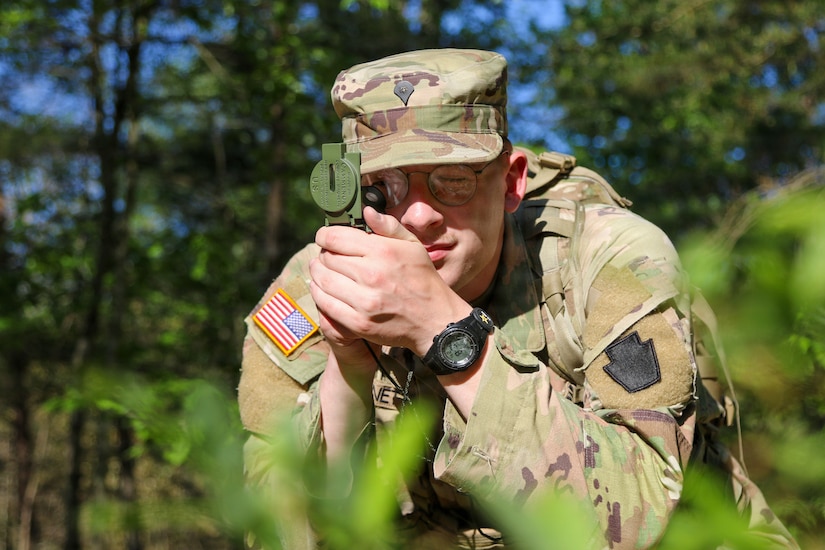
A man in a camouflage military uniform looks through a compass while propped up on his elbows in the grass.

Conducted from April 28 to May 26, the validation course expands the previous 23-day curriculum, creating a more field-intensive leadership experience that places soldiers in tactical scenarios designed to evaluate decision-making, troop-leading procedures and squad-level leadership under stress. 

The validation builds on a recent active-duty pilot course conducted at Fort Sill, Oklahoma, and positions the Pennsylvania National Guard at the forefront of implementing and refining the Army's updated curriculum for junior noncommissioned officers before fielding it forcewide. 

As part of the validation effort, Regional Training Institute leaders from Nebraska, Colorado, Ohio, Mississippi and Vermont traveled to Pennsylvania to observe how the 166th Regiment planned and executed the new field-focused training. The visiting instructors reviewed training products, lesson plans and evaluation methods that may later be adopted by Regional Training Institutes across the National Guard enterprise. 

"Nothing from the 23-day [basic leader course] is being lost," said Army Master Sgt. James Webb, 166th Regiment basic leader course chief of training. "But a lot is being added — what we're calling reps and sets — which is essentially an additional six or seven days of field training." 

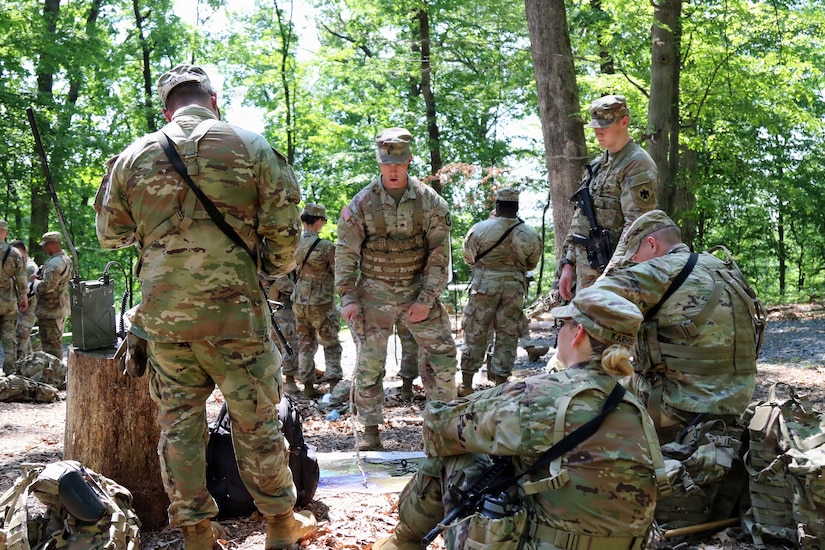
More than a dozen people in camouflage military uniforms stand in a group looking down at a map on the ground in a wooded area.

Under the updated program of instruction, students now spend eight days in the field conducting leader-stakes training, land navigation and a culminating situational training exercise that evaluates leadership performance in realistic combat scenarios. 

During the leader-stakes portion of the course, soldiers rotate through training lanes that hone their skill level 10 tasks — entry-level skills required of junior enlisted soldiers, also known as warrior tasks and battle drills. These include medical skills, weapons proficiencies, patrolling techniques and vehicle recovery operations that progressively build tactical proficiency and confidence while preparing soldiers for leadership evaluations later in the course. 

Students train on tasks such as reacting to ambushes and indirect fire, evacuating casualties, requesting medical evacuations, conducting patrol base operations and leading troops. The training grows more complex each day. 

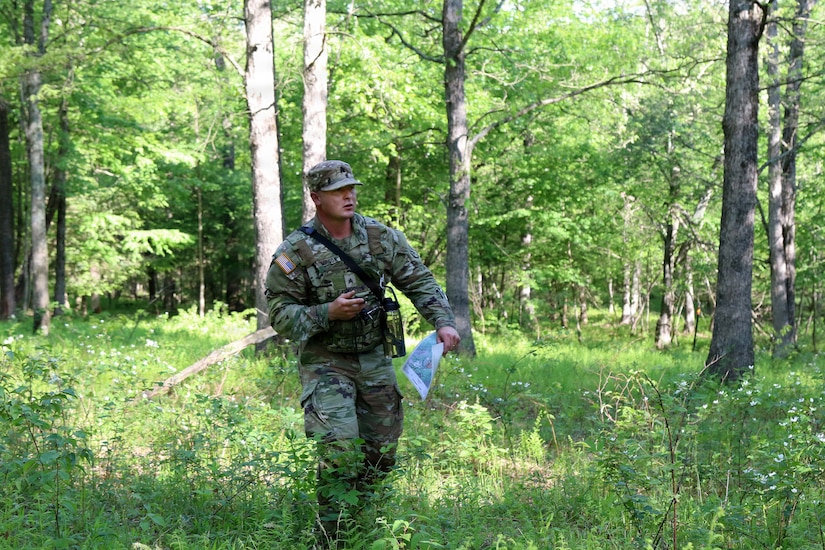
A man in a camouflage military uniform walks through the forest while holding a map in one hand and a compass in the other.

The culminating exercise places soldiers in leadership positions, during which they receive fragmentary orders, develop plans, brief subordinates and execute missions under time constraints and simulated battlefield conditions. 

"The end goal is to develop team and squad-level leaders by putting students in a tactical position and having them execute troop-leading procedures and make decisions," Webb said. "We're not grading them on their ability to do battle drills; we're grading them on the ability to make decisions in a stressful environment." 

During the course, Army Sgt. Maj. Elizandro Jimenez, a basic leader course manager assigned to the U.S. Army Noncommissioned Officer Academy at Fort Bliss, Texas, visited the 166th Regiment to observe how the team implemented the new program and provided feedback on the evolving courseware. 

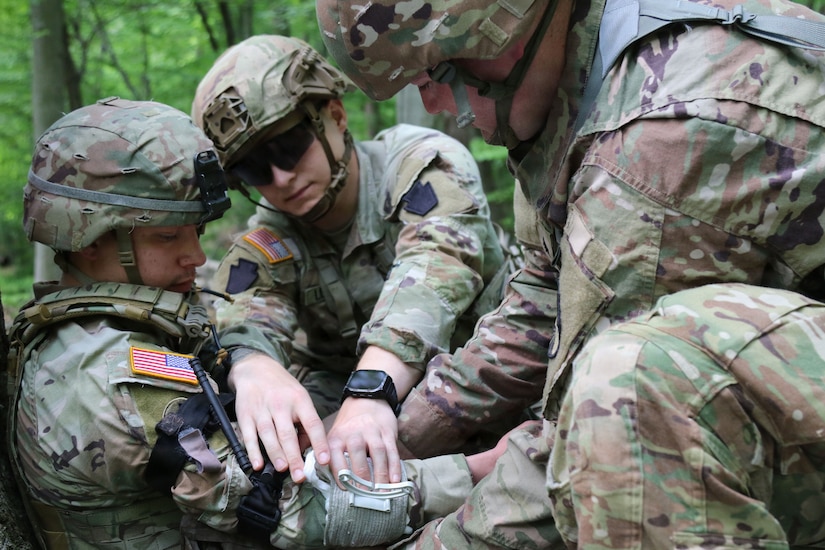
Two people in camouflage military uniforms treat a simulated casualty on another person in similar attire in a wooded area.

"Pennsylvania's cadre demonstrated exceptional adaptability while implementing this new curriculum," Jimenez said. "The work being done here is helping shape how the Army develops future noncommissioned officers across the force." 

Students participating in the pilot course said the additional training time and increased tactical focus have made the experience more valuable and realistic. 

"I think the extra week of training will really help people fully understand their roles as NCOs," said Army Sgt. Tyler Kase, a combat engineer assigned to the Pennsylvania National Guard. "It's changed my perspective as a leader and how I'll handle things moving forward when I return to my unit." 

Army Sgt. Drayton Coyle, an infantryman and team leader assigned to the Massachusetts National Guard, said the expanded field training better prepares junior leaders for unpredictable operational environments. 

"You don't know what's going to happen in the Army," Coyle said. "The operational environment and the way we fight is rapidly changing. Having that culminating event — that [situational training exercise] at the end of the course — will help us prepare." 

Thursday, May 21, 2026

Give Them Wings, Teach Them to Fly: The Making of a Phoenix Raven

Opportunity, challenge, travel, legacy — these guiding words form the motivational reason for Air Force security forces defenders as they push through the demanding 28-day Phoenix Raven Qualification Course with the 421st Combat Training Squadron at Joint Base McGuire-Dix-Lakehurst, New Jersey. 

Phoenix Ravens are tasked with safeguarding aircraft, personnel and critical assets in austere locations where threats may be elevated or unpredictable.

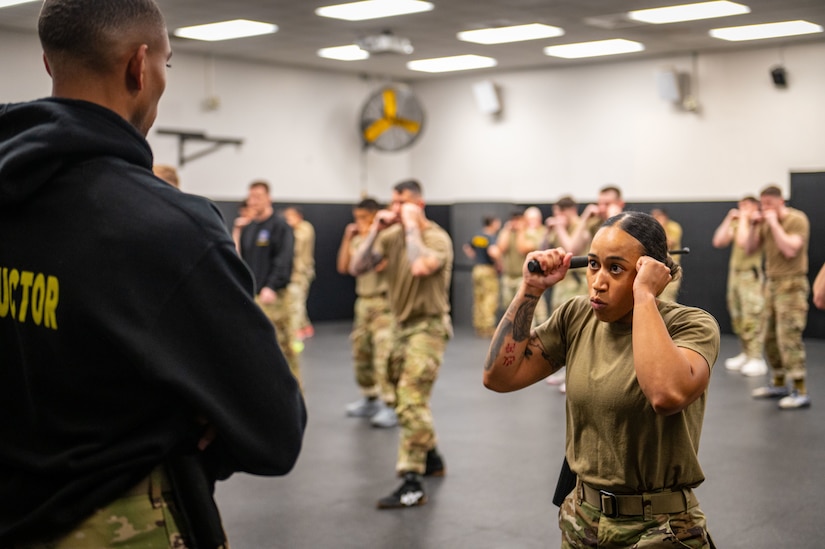
Dozens of people in camouflage military uniforms practice self-defense techniques in a gym while another person observes.

The course equips airmen with the advanced skills and adaptability required for this specialized mission. The curriculum emphasizes cross-cultural awareness, legal considerations, embassy operations, airfield assessment techniques, explosive ordnance recognition, aircraft search procedures and unarmed self-defense. 

"It's our job to prepare these candidates to be able to go straight from graduation to the operational mission and to be able to perform," said Air Force Staff Sgt. Joshua Pineda, course instructor. "We tailor training to be as intense as possible and push them as hard as we can, because our teammates downrange or in hubs right now are depending on us to get it right here." 

The course leadership team is composed of current Ravens, as well as subject matter experts from explosive ordnance disposal, the Air Force Office of Special Investigations and the base judge advocate office.  

From Day 1, trainees are placed in an intense, fast-paced environment designed to test and exceed standard operational limits. Instructors enforce strict discipline and attention to detail, sharpening situational awareness of self, team members and surroundings. 

Physical fitness is consistently integrated as a key training tool, training the mind to maintain mental clarity while replicating the physical strain and fatigue that may be encountered during real-world missions. 

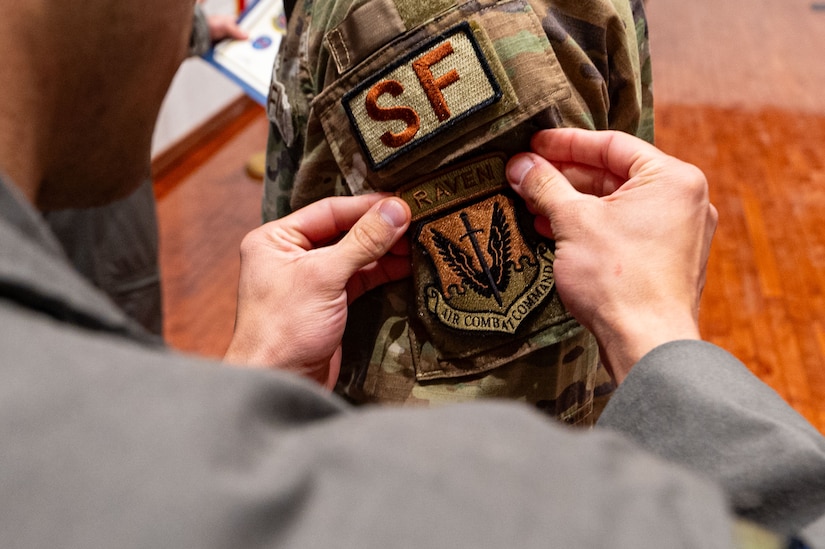
A close-up of a person attaching a patch to the sleeve of another person's camouflage military uniform. The patch reads, "Raven, Air Combat Command."

"We push them to their limit here. We try and redline these candidates to put them in a stress inoculation phase that pushes them out to the point where they don't know how to handle a situation," said Air Force Tech. Sgt. Michael Lex, course noncommissioned officer in charge. "We give them the baseline and the foundation to be able to push through that mental barrier, which can happen on every single mission." 

Beyond the stress and mental exhaustion candidates face, conflict de-escalation tests the defenders to see if they have what it takes to earn the coveted Raven tab. 

A Raven's first line of defense is communication. The course emphasizes talking as the primary method for diffusing situations. If those efforts fail, hand-to-hand combat using a baton, a nonlethal weapon, becomes their primary defense. 

To practice these skills, cadets enter the "house of pain" for the initial evaluation. There, they face off against instructors and fellow students wearing distinctive red protective gear. The service member rotates continuously throughout the combative interaction, forcing cadets to adapt to shifting dynamics in the encounter. 

"You never know what you're going to do until you get hit. Not many students that come through have ever been in a fight before, or have gotten hit," Pineda said. "I think the biggest misconception that students have is that there is a way to beat the [evaluation]. The point of training is to beat them but also to teach them to take the hit, keep going and get that situation under control." 

As military operations worldwide evolve, the course leaders continue to play a vital role in securing assets across the globe. They maintain operational proficiency through deployments during their tenure at the training squadron. This real-world experience helps shape the curriculum and enhance credibility with students. 

Weeks of classroom instruction and training for cadets culminate in a field training exercise aboard a decommissioned C-130 Hercules aircraft. Instructors transform into adversaries in scenarios based on past Raven missions, testing to see if students can navigate their way through high-stress, simulated deployment scenarios to protect their assets and personnel. 

Upon completion of the course, graduates are awarded the coveted Raven tab, identifying them as certified Phoenix Ravens, members of an elite force who are ready to tackle any challenge ahead. 

"I think the tab means a lot to everybody [who] wears it, because we all get trauma bonded by surviving the course or any mission that we fly on that may go the wrong way. Like in Afghanistan or Operation Epic Fury, you can experience indirect fire or drones flying at you with [weapons]," Lex said. "You might not be expecting that to happen, but when you look to your left and right, you see the Ravens [who] are there with you, and you know you will get through it together." 

Ravens remain a force that is routinely called upon to protect Air Force personnel, aircraft and resources in uncertain environments around the world. Forged through adversity, discipline and trust, each graduate leaves the course carrying more than just the tab; they carry the responsibility of safeguarding the mission and legacy of those who have served before them.

Tuesday, May 19, 2026

The Most Dangerous Phrase in Lodge Leadership

Author’s Note

This is probably a very good essay filled with sound advice, hard truths, and warnings that could help many organizations avoid preventable decline.

Almost no one who truly needs to read it will.

Some will dismiss it as too harsh. Some will assume it applies to someone else. Others will nod in agreement while continuing exactly as before. Institutions rarely collapse because they lacked warnings. They collapse because warnings are uncomfortable, and comfort is easier than accountability.

Still, I wrote it because certain things need to be said out loud, even when they are unlikely to change minds.

And honestly, writing it made me feel better.

Within many nonprofit organizations, fraternal groups, Masonic Hall Associations, and trustee boards, one phrase is repeated with almost casual confidence when recruiting officers, directors, or trustees:

“Don’t worry. It’s only one meeting a month.”

At first glance, the statement appears harmless. It is often intended to reassure hesitant volunteers that service will not overwhelm their personal lives. Yet beneath that seemingly innocent phrase lies one of the most destructive attitudes in institutional governance. The “one meeting a month” mindset minimizes responsibility, lowers expectations, attracts unprepared leadership, and gradually erodes the culture of stewardship necessary to preserve organizations and their assets for future generations.

The greatest danger of this mentality is that it fundamentally misunderstands what governance actually is. Governance is not attendance. Governance is responsibility. A trustee or director does not fulfill his obligation merely by sitting in a chair once a month, listening to reports, and voting on motions. The true responsibility exists continuously — every day between meetings — because the fiduciary duty never pauses. Buildings continue to age, leases continue to bind the organization, insurance exposure continues to exist, and financial liabilities continue to accumulate whether a board meets or not.

This misunderstanding is especially dangerous within Masonic Hall Associations and fraternal organizations because these institutions often manage aging and historically significant properties with limited financial reserves. A Hall Association board may oversee:

  • commercial tenants,

  • mortgages,

  • insurance policies,

  • capital improvement projects,

  • investment accounts,

  • maintenance contracts,

  • legal compliance issues,

  • and long-term preservation planning.

These are not ceremonial obligations. They are serious fiduciary responsibilities involving real financial and legal exposure. Yet when potential trustees are told that the role only involves “one meeting a month,” the organization unintentionally communicates that expertise, preparation, and active engagement are unnecessary. The office becomes viewed as symbolic rather than consequential.

The result is often the recruitment of individuals based not upon competence, but availability, popularity, or seniority. Instead of seeking people with experience in finance, law, construction, real estate, risk management, or nonprofit governance, organizations begin selecting directors merely because they are willing to occupy the seat. Over time, this creates boards that lack the collective knowledge necessary to govern responsibly.

One of the most damaging consequences of passive governance is deferred maintenance. Many institutional crises begin not with corruption or scandal, but with neglect. Roof repairs are postponed. Electrical systems are ignored. Reserve funds are depleted without replenishment. Insurance coverage becomes outdated. Tenant agreements go unreviewed. Each individual decision may appear minor, but together they create a slow institutional decay that can ultimately destroy an organization’s financial stability.

The danger is magnified because deterioration often happens gradually. A board operating under the “one meeting a month” mentality tends to become reactive rather than strategic. Problems are addressed only after they become emergencies. By the time a failing roof, structural issue, or financial shortfall becomes impossible to ignore, the cost of correction may exceed the organization’s ability to recover.

Another serious symptom of the “one meeting a month” mentality is the gradual breakdown of the meeting process itself. Ironically, organizations that minimize governance often become unable to govern at all. One of the clearest warning signs is the repeated failure to achieve a quorum.

Boards typically fail to maintain quorum because members no longer view attendance as a fiduciary obligation. Once the role is psychologically reduced to a casual volunteer activity rather than a position of institutional responsibility, attendance becomes optional in the minds of many directors. Personal schedules, minor inconveniences, fatigue, or simple disinterest begin to take priority over governance duties. Over time, directors stop preparing, stop engaging, and eventually stop attending altogether.

This creates a dangerous cycle. As attendance declines, productive board members become frustrated by the inability to conduct business. Meetings are postponed, decisions delayed, and unresolved issues accumulate month after month. Eventually, even responsible members begin disengaging because they feel the organization has become ineffective. The board slowly drifts into paralysis.

The consequences can be severe. Without quorum:

  • contracts cannot be formally approved,

  • expenditures may lack authorization,

  • leases may go unsigned,

  • maintenance projects may stall,

  • insurance issues may remain unresolved,

  • and financial oversight weakens dramatically.

Critical decisions are deferred while liabilities continue growing in the background. Buildings deteriorate, tenants become frustrated, and organizational credibility suffers. In some cases, the inability to maintain quorum becomes the first visible sign of a deeper institutional collapse.

Perhaps even more dangerous is what often replaces formal meetings: governance by text message, email chains, hallway conversations, or informal side agreements. When trustees stop meeting regularly but continue attempting to make decisions electronically or informally, the organization enters extremely hazardous territory both legally and operationally.

Governance by text message creates several serious problems.

First, it destroys transparency. Proper meetings create structure:

  • agendas,

  • recorded motions,

  • documented votes,

  • minutes,

  • debate,

  • and accountability.

Text conversations rarely provide these safeguards. Important decisions become fragmented across multiple private conversations. Some directors may be excluded entirely. There may be no clear record of who voted, what alternatives were considered, or whether proper procedures were followed.

Second, informal electronic governance weakens deliberation. Complex fiduciary decisions require discussion, questioning, and collective analysis. Text messaging encourages rushed reactions rather than thoughtful governance. Nuance disappears. Directors may approve significant expenditures, contracts, or legal positions with little meaningful review simply because responding electronically feels casual and low-risk.

Third, governance by text may violate bylaws, corporate governance rules, and nonprofit legal requirements. Many nonprofit and mutual benefit corporations require:

  • formal meetings,

  • proper notice,

  • quorum,

  • recorded minutes,

  • and documented votes.

Boards that operate primarily through text messages may unknowingly expose themselves to challenges regarding the legitimacy of their decisions. In extreme cases, unauthorized actions may create liability for individual directors or invalidate corporate actions entirely.

The deeper problem, however, is cultural. A board that governs primarily through text messaging often reflects an organization that has stopped treating governance as a serious institutional responsibility. The board becomes reactive, fragmented, and personality-driven rather than structured and accountable. Decisions begin occurring through convenience instead of process.

This is especially dangerous in Masonic Hall Associations because they frequently manage:

  • valuable real estate,

  • long-term leases,

  • restricted funds,

  • historical property,

  • and major fiduciary obligations.

Such institutions cannot be responsibly governed through sporadic text exchanges and informal consensus. Stewardship requires discipline, structure, and active participation.

A functioning board is not simply a collection of names on paper. It is a deliberative body. The meeting itself serves an essential legal and organizational purpose: it gathers fiduciaries together in one place to collectively exercise judgment on behalf of the institution. When boards stop meeting, they stop governing in any meaningful sense.

Equally dangerous is the psychological effect the “one meeting a month” attitude creates within the board itself. When leadership is minimized, responsibility becomes diffused. Individual directors subconsciously assume someone else is paying attention. Meetings become procedural rather than analytical. Financial reports are accepted without scrutiny. Motions are approved without investigation. Important questions go unasked because members begin to believe their presence alone satisfies their obligation.

This environment creates the perfect conditions for institutional failure. In some organizations, passive boards allow one dominant individual to assume unchecked control because nobody else is sufficiently engaged to provide oversight. In others, no one truly understands the finances, contracts, or liabilities because nobody has taken the time to learn them. Either condition is dangerous. Effective governance requires active participation, informed decision-making, and the courage to ask difficult questions.

Another serious danger is the loss of institutional memory and heritage. Masonic halls and fraternal properties are often more than real estate. They are repositories of history, tradition, and identity accumulated across generations. Many were built through the sacrifice and labor of members long deceased. A careless or inattentive board can lose in a few years what took a century to build. Once sold, neglected beyond repair, or financially exhausted, such institutions are rarely recovered.

The “one meeting a month” attitude also distorts the moral dimension of fiduciary service. Trusteeship is not merely administrative; it is ethical stewardship. A trustee or director holds assets in trust not only for current members, but for future generations. The position demands prudence, diligence, preparation, and accountability. It requires individuals who understand that their role is custodial rather than ceremonial. To minimize that responsibility is to weaken the culture of stewardship upon which long-term institutional survival depends.

Healthy organizations understand this distinction. They do not recruit trustees by downplaying the seriousness of the office. Instead, they communicate both the honor and responsibility attached to the role. They seek directors who are willing to study reports, ask questions, develop expertise, and actively protect the institution’s future. They understand that good governance is not measured by meeting frequency, but by the quality of oversight exercised between meetings.

In truth, the monthly meeting is often the smallest part of the job. The real work of governance occurs in preparation, analysis, strategic thinking, oversight, and stewardship. Buildings do not preserve themselves. Investments do not protect themselves. Institutions do not survive automatically. They survive because responsible individuals understand that fiduciary duty is continuous.

The phrase “it’s only one meeting a month” therefore represents more than a misunderstanding of time commitment. It reflects a misunderstanding of leadership itself. And when that mindset becomes embedded in an organization’s culture, decline is rarely far behind.

A wiser philosophy would recognize the true nature of fiduciary service:

The meeting may occur once a month, but the responsibility exists every day.
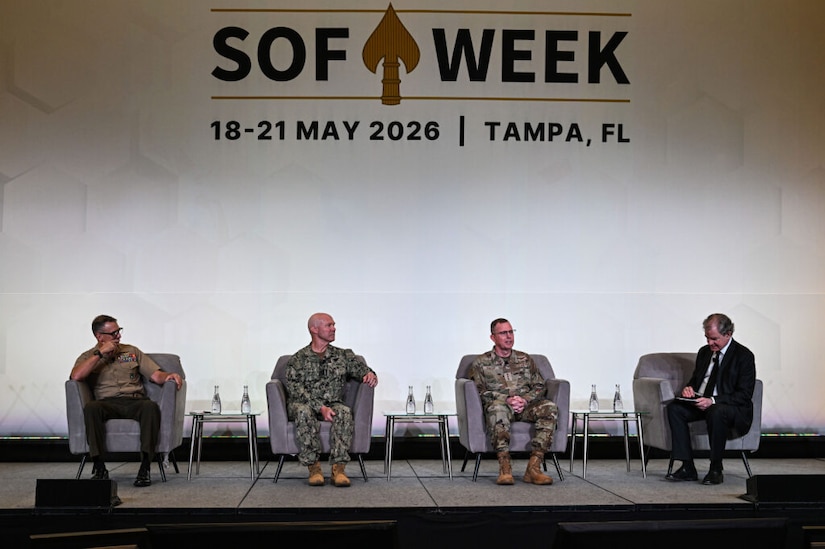
Senior Leaders Discuss Recruiting STEM Candidates Into Special Ops

During a panel discussion at the Special Operations Forces Week 2026 convention in Tampa, Florida, today, a pair of senior SOF leaders discussed how to bring more recruits with science, technology, engineering and mathematics backgrounds into SOF formations.

Four men, three of them in camouflage military uniforms and one wearing a business suit, sit in chairs indoors on a stage, having a discussion. Behind them on the wall is a sign that reads "SOF Week 18-21 May 2026, Tampa, Florida."

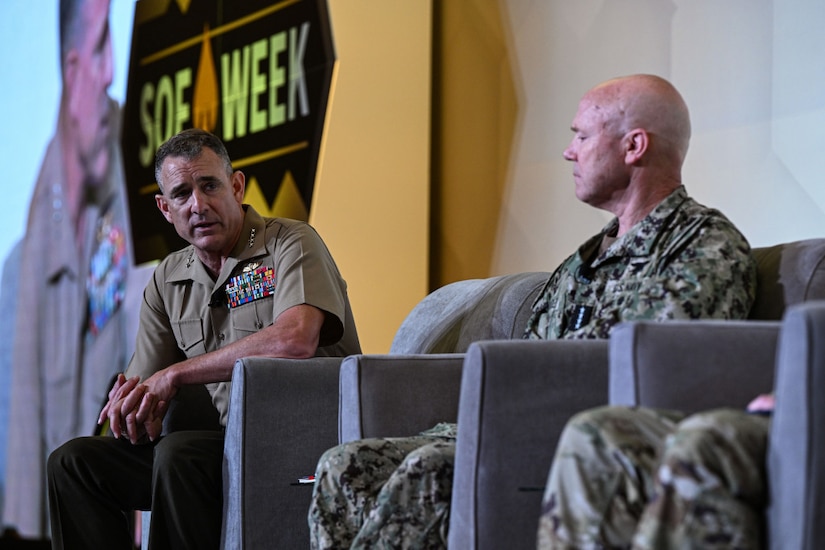
Navy Adm. Frank M. Bradley, commander of U.S. Special Operations Command, and Marine Corps Gen. Francis L. Donovan, commander of U.S. Southern Command, discussed the topic during a panel discussion on SOF integration into the joint force.

When asked how to attract more SOF recruits with STEM backgrounds, Bradley said the best way to gain such talent is to challenge those individuals.

"You have to provide challenges for people who are STEM-oriented to solve, [and] the good thing is the world's providing plenty of those [challenges] for us. … I don't have to create new challenges to attract STEM-oriented professionals who want to fight and use their intellect to solve those problems, [because the problems] are abundant," Bradley said.

He elaborated that the SOF community is currently going through a transformation that is focused on modernization aimed at establishing operational test and evaluation elements within SOF formations that are capable of working with engineers and acquisition professionals to solve difficult problems through both technical means and creative approaches.  

Bradley also spoke about the need to introduce children to STEM-related subjects early.

"We need to realize that tomorrow's recruits coming into the military are sitting at your kitchen tables. And so, if you want more recruits in the future who are STEM-oriented in the military, we need to give our families an opportunity to be exposed and inculcated with an interest in [STEM]," Bradley explained. 

As one example of how to get children to take on such an interest, Bradley spoke about the military's partnership with Congress and key policymakers to invest STEM outreach dollars into academic institutions with high-quality STEM cultivation programs. 

"[We can] focus [families] on our counterpart force concentration centers to help those families to have opportunity for robot camps, drone camps, coding camps — anything to do with introducing that interest at a very young age — so that, as we all aspire to, we can make the next generation smarter and better than ourselves," Bradley said.

Donovan weighed in on the topic, noting the importance of future service members needing to maintain a balance between being heavily STEM-oriented and also warrior-centric.

Two men, both wearing camouflage military uniforms, sit next to each other indoors, having a discussion.

"I think there's a split point here we have to make sure that we're very aware of. … We want a place for everyone," Donovan explained in reference to finding such a balance. 

"Because I still think whether it's SOF or conventional forces, we have to have young Americans that … when the chips are down, they leave that ramp in the back of a [military vehicle] and move into the hardest day of their lives; and they need teammates from the left and right that [also] have the grit to see the mission done," he continued.

Donovan added that, while he views STEM and advanced technologies as value-added to the force, military technology should never fully replace humans.

"We can never … step away from the fact that, anytime we talk about autonomous systems, I'm never ever saying that there's not going to be a human included. … Because someone still has to place their foot on a piece of ground to declare victory, and that will never go away," he said.

The War Department has invested in STEM in one form or another since 2005. Presently, the department's DOW STEM program mission is to "inspire, cultivate, and develop exceptional STEM talent through a continuum of opportunities to enrich our current and future Department of War workforce poised to tackle evolving defense technological challenges," according to the program's website.

Friday, May 15, 2026

The Silent Square of Leadership

Among the working tools of Freemasonry, few possess deeper symbolic meaning than the Square. It is the emblem of virtue, integrity, and moral conduct. Yet within the ritual itself lies a quieter lesson often overlooked. The Square, representing the Worshipful Master—the leader of the lodge—is placed first upon the altar and removed last when the work is complete. In that simple act, Freemasonry communicates one of the oldest truths of leadership: the leader is the first to arrive and the last to leave.

The symbolism is neither accidental nor decorative. It reflects an expectation that leadership is rooted not in privilege, but in service. The Master does not stand above the lodge as a ruler detached from labor. He stands responsible for it. Before the brethren arrive, he prepares the work. After they depart, his obligations remain. The Square stays because the duties of leadership continue long after recognition fades.

This principle closely parallels what modern scholars describe as servant leadership. Robert K. Greenleaf argued that the true leader is not defined by authority alone, but by a willingness to serve first. Greenleaf wrote:

“The servant-leader is servant first… It begins with the natural feeling that one wants to serve, to serve first.” (Greenleaf, 1970, p. 7)

Freemasonry expressed this concept symbolically long before it was formally named in academic literature. The Master’s role is not ceremonial prestige; it is enduring responsibility. The Square is placed first because leadership must begin before others are ready to labor. It is picked up last because leadership remains after others are finished.

History’s greatest military leaders often embraced this same philosophy. George Washington, perhaps the most recognized Masonic military leader in American history, understood that leadership depended upon visible personal conduct. He wrote:

“Example, whether it be good or bad, has a powerful influence.” (Washington, 1788/1939, Vol. 29, p. 492)

Washington’s words reveal why the Square occupies its symbolic position. Leadership is contagious. A leader’s discipline, punctuality, sacrifice, and composure spread throughout the organization just as quickly as laziness or indifference. If the Master arrives unprepared, the lodge becomes unprepared. If he approaches the work with seriousness and integrity, the brethren are far more likely to do the same. The Square is first because example must come before instruction.

General Douglas MacArthur echoed this same belief nearly two centuries later in his famous address to the cadets at West Point:

“The officer must set the example.” (MacArthur, 1962)

MacArthur’s statement was simple, but profound. Rank alone cannot inspire loyalty or excellence. Men follow conduct more willingly than commands. The officer who avoids hardship while expecting sacrifice from others eventually loses moral authority. The same principle applies within the lodge. The Worshipful Master cannot ask the brethren for dedication if he himself is absent from the labor. The Square remaining until the close of the lodge symbolizes that leadership does not retreat from responsibility when the work becomes inconvenient or exhausting.

Even among enlisted men turned battlefield heroes, the same lesson appears. Audie Murphy, the most decorated American combat soldier of the Second World War and a Freemason, became legendary not merely because of bravery, but because he consistently led from the front. Murphy stated plainly:

“You lead from the front.”

Though brief, the statement captures the ancient understanding shared by soldiers and Masons alike: true leadership is visible. The leader does not push others into danger while remaining safely behind. He stands where the burden is greatest. Within Freemasonry, this symbolism is reflected in the Master’s position at the head of the lodge, bearing responsibility for its harmony, instruction, and conduct.

The lesson of the Square also challenges many modern ideas about leadership. Contemporary culture often associates leadership with status, visibility, or personal advancement. Freemasonry teaches something different. The Square reminds us that leadership is often quiet, repetitive, and unnoticed. It is arriving before anyone else to prepare the lodge room. It is mentoring younger brethren after meetings have ended. It is ensuring harmony during disagreement. It is carrying responsibility even when no recognition follows.

The operative origins of the Square deepen this symbolism further. In stonemasonry, the square ensured that the structure being built would stand true. A wall improperly squared endangered the stability of the entire building. Likewise, weak or careless leadership threatens the moral stability of the lodge itself. The Master must therefore embody consistency, steadiness, and upright conduct so that the symbolic temple remains strong.

The ritual action of placing the Square first and removing it last therefore teaches a timeless principle. Leadership is not about occupying the highest seat. It is about bearing the longest burden.

The Square is silent, yet its lesson endures.

The leader arrives first.

The leader leaves last.

And between those moments, he sets the example by which all others labor.

References

Greenleaf, R. K. (1970). The servant as leader. Robert K. Greenleaf Center.

MacArthur, D. (1962, May 12). Duty, honor, country. Address delivered to the Corps of Cadets, United States Military Academy, West Point, NY.

Murphy, A. Quoted in military leadership collections and biographical summaries of Murphy’s battlefield leadership.

Washington, G. (1939). The writings of George Washington (J. C. Fitzpatrick, Ed., Vol. 29). U.S. Government Printing Office. (Original work written 1788)