Sunday, March 29, 2026

Can Do, Will Do, and Does What Is Right: Leadership Lessons from the Age of Sail

Leadership is often described through action—what leaders do, how they decide, and how they influence others. Yet beneath those actions lies a more fundamental question: why do people choose to follow? The answer is trustworthiness. Trust is not automatic; it is earned through consistent demonstration of competence, care, and character. Research in organizational leadership identifies three core elements of trustworthiness—ability, benevolence, and integrity—as the foundation upon which trust is built (Colquitt, Scott, & LePine, 2007).

This article introduces both a framework for understanding trustworthiness in leadership and a broader work in progress, Age of Sail. This book examines leadership not through abstract theory alone, but through the lived experiences—fictionalized, yet deeply realistic—of naval officers during one of the most demanding periods in history. At sea, leadership is immediate and unforgiving. There is no time for theory when a storm is rising or an enemy ship is closing. It is in these moments that leadership is revealed.

From these experiences emerges a simple framework: a leader can do, a leader will do, and a leader does what is right.

Trustworthiness as the Foundation of Leadership

Trustworthiness is built on three dimensions: ability, benevolence, and integrity. Ability reflects competence; benevolence reflects intent toward others; and integrity reflects consistency with ethical principles. These elements are not interchangeable—they each independently contribute to trust and are strongly related to outcomes such as performance and risk-taking behavior (Colquitt et al., 2007).

In practice, this means that followers are constantly evaluating their leaders, asking three fundamental questions:

  • Can this person lead me?

  • Will this person act in my best interest?

  • Will this person do what is right?

The Age of Sail provides vivid answers to each of these questions.

Can Do: The Foundation of Competence

The first test of leadership is competence.

In Treason’s Harbor, Captain Jack Aubrey faces a sudden squall—one of the most dangerous conditions a sailing vessel can encounter. The wind shifts violently, visibility drops, and the margin for error disappears. There is no committee, no delay, no second chance. Orders must be given immediately, and they must be correct.

Aubrey does not hesitate. He acts with precision, issuing commands that his crew executes without question. What is striking is not just his decisiveness, but his expectation: competence is assumed. Seamanship is not praised; its absence is condemned as “discreditable, if not downright wicked” .

In that moment, trust is not discussed—it is demonstrated.

The crew follows because they know he can do the job.

This reflects the core principle of ability. Without competence, leadership fails before it begins. Research confirms that ability is one of the strongest predictors of trust, as followers must believe their leader has the skills necessary to succeed (Colquitt et al., 2007).

Competence creates credibility. And credibility is the first step toward trust.

Will Do: The Test of Intent

Competence answers the first question, but it leads immediately to the second:

Will this leader act in my best interest?

This is the domain of benevolence.

In the Ramage series, Nicholas Ramage demonstrates a different kind of leadership. He is not only competent—he is intentional in how he develops his men. One of his officers reflects that Ramage is like a mirror, showing a man not who he is, but who he could become—and leaving him believing that he is that man.

This is not authority. This is influence.

Ramage does more than command; he invests in his people. He recognizes potential, builds confidence, and creates an environment where individuals rise to meet expectations. His leadership is not about control—it is about growth.

This is benevolence in practice.

It is also reflected in the culture aboard naval ships, where leaders rely on the strengths of their crews and foster mutual respect. Leadership is not simply about issuing orders; it is about understanding people and aligning their abilities toward a shared purpose.

Research supports this dynamic. Benevolence signals to followers that a leader’s intentions are not self-serving, which increases trust and strengthens commitment (Colquitt et al., 2007).

People may follow a competent leader.
They commit to a leader who cares.

Does What Is Right: The Measure of Integrity

The final test of leadership is integrity.

Horatio Hornblower provides a powerful example. Known for his competence and discipline, Hornblower is equally defined by his internal standard. When he makes a mistake, he does not deflect blame. Instead, he reflects:

If it was ignorance, there was no excuse… that was incompetence, and there was no excuse for incompetence.

This is more than self-criticism—it is a commitment to principle.

Hornblower understands that leadership is not situational. Standards do not change based on convenience. Integrity requires consistency, even when it is uncomfortable or costly.

This consistency builds reputation. It also builds trust.

Followers may not always agree with a leader’s decisions, but they must believe those decisions are grounded in principles. Integrity ensures that leadership is predictable and reliable.

Research confirms that integrity is a critical driver of trust, as it signals alignment between a leader’s words and actions (Colquitt et al., 2007).

Without integrity, leadership collapses.
With it, leadership endures.

Bringing It Together: Trustworthiness in Action

The three elements of trustworthiness—ability, benevolence, and integrity—are not independent. They are interdependent, each reinforcing the others.

  • Aubrey demonstrates ability, earning immediate confidence in crisis.

  • Ramage demonstrates benevolence, building loyalty and commitment.

  • Hornblower demonstrates integrity, sustaining trust over time.

Together, they answer the three essential questions of leadership:

  • Can you lead me?

  • Will you act for me?

  • Will you do what is right?

When all three answers are yes, trust emerges.

The Age of Sail project brings these concepts to life, using narrative to bridge theory and practice. Through these stories, leadership is not simply defined—it is experienced.

Conclusion

Trustworthiness is the foundation of effective leadership. Grounded in competence, care, and character, it enables leaders to influence, inspire, and achieve results. While modern research provides a framework for understanding these concepts, the Age of Sail demonstrates them in action.

The book Age of Sail seeks to explore these lessons in depth, offering readers a narrative-driven approach to leadership. By following the journeys of fictional naval officers, readers gain insight into the realities of leadership—its challenges, its responsibilities, and its demands.

Ultimately, leadership is not proven in comfort, but in challenge. And in those moments, the same truth applies:

A leader must be able.
A leader must be willing.
A leader must be right.

References

Colquitt, J. A., Scott, B. A., & LePine, J. A. (2007). Trust, trustworthiness, and trust propensity: A meta-analytic test of their unique relationships with risk taking and job performance. Journal of Applied Psychology, 92(4), 909–927.

Forester, C. S. (1951). Commodore Hornblower. Little, Brown and Company.

Forester, C. S. (1962). Hornblower and the Hotspur. Little, Brown and Company.

Foster, R. E. (2026). Leadership in the Age of Sail (Unpublished manuscript).

Kent, A. (1972). To glory we steer (Bolitho series). Hutchinson.

O’Brian, P. (1990). Treason’s harbour. W. W. Norton & Company.

Pope, D. (1969). Ramage and the drumbeat. Weidenfeld & Nicolson.

Monday, February 16, 2026

Pentagon Press Secretary Celebrates Air Force Leadership School Graduates at Nationals Park

Airmen and guardians traded in a traditional auditorium for the ballpark as they celebrated their graduation from the Donald L. Harlow Airman Leadership School at Nationals Park in Washington, yesterday, leaving with a bigger takeaway than a certificate: the ability to lead others.

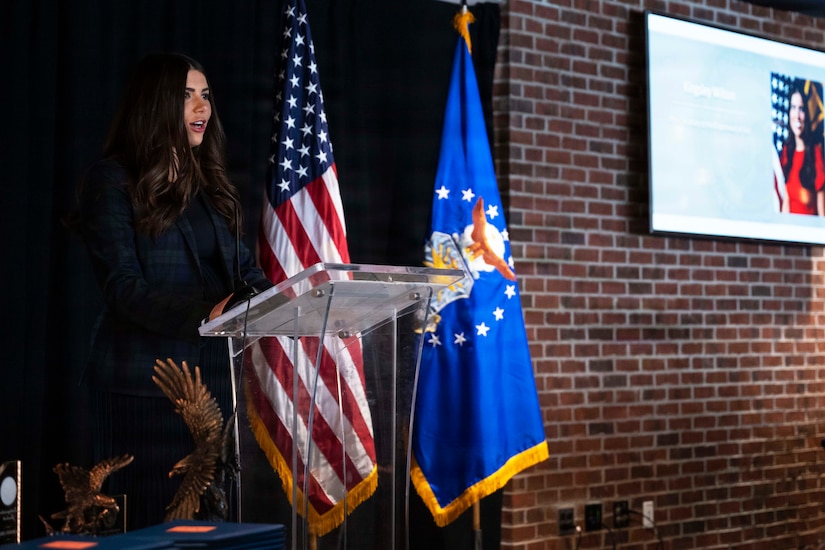
A woman in business attire stands behind a lectern and speaks. On her left are an American flag, a blue flag with an eagle encircled by stars in the center and a brick wall with a monitor hanging from it.

Pentagon Press Secretary Kingsley Wilson attended the ceremony hosted by the 316th Wing at Joint Base Andrews, Maryland. She used her remarks to draw a straight line between her recent transition and the one the graduates are about to make. 

Washington Nationals Senior Vice President of Community and Government Engagement Gregory McCarthy introduced Wilson, and the ceremony — complete with colors, anthem and invocation — gave the graduates and their families a moment to pause and celebrate together. 

"Now you're stepping into the transition [Airman Leadership School] is built for: moving from being the one who gets the job done — to being the one who makes sure the team gets the job done," Wilson told the service members. 

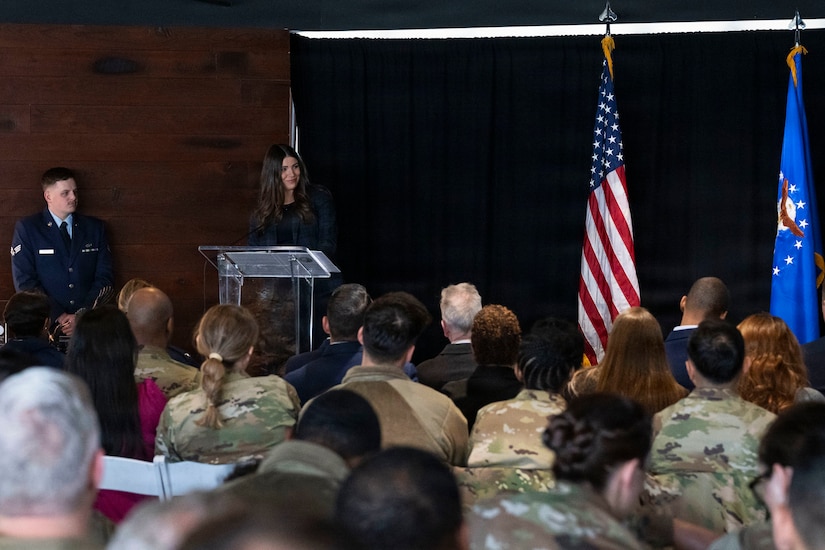
A woman in business attire stands behind a lectern and speaks to more than a dozen people wearing a mix of business attire and camouflage military uniforms. A man in a formal military uniform stands to her right, and on her left are an American flag and a blue flag with an eagle encircled by stars in the center.

The leadership school is the first level of enlisted professional military education and a milestone required before being promoted to staff sergeant, Wilson said. The course is 192 hours over 24 academic days focused on culture, mission, leadership and problem-solving — training designed to help the service members think and respond when the environment is "complex and ambiguous." 

Wilson didn't spend much time on the curriculum, however. Instead, she spoke about what happens when responsibility shows up faster than you expect. 

"A lot of you are in the same [stage] of life I'm in," she said. 

Not long ago, Wilson said, she was early in her career, "learning fast, trying to earn trust," working in communication, where the pace is relentless and mistakes travel fast. Then she took the oath as a presidential appointee and became the Pentagon press secretary. 

"Overnight, my job changed. I didn't just have tasks — I had a mission," she said. "And I learned quickly that leadership is not about having a title. It's about carrying responsibility." 

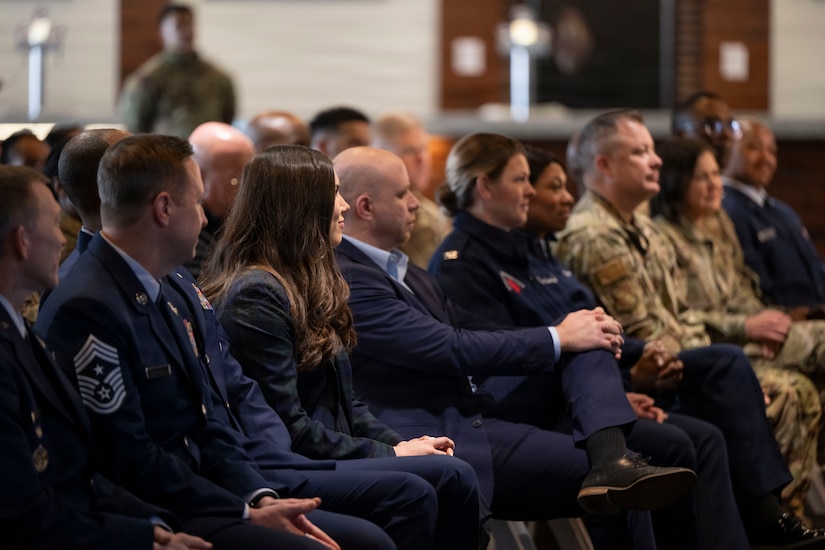
More than a dozen people, wearing a mix of business attire, formal military uniforms and camouflage military uniforms, sit in an indoor ceremony.

That's the same shift the Airman Leadership School is built to reinforce, Wilson told the graduates — becoming the first line of leadership for junior enlisted who are learning the job, testing boundaries and sometimes wondering if they belong. 

Wilson offered three lessons she said apply "directly to the stripes you're stepping into."

First, she told them, "clarity is key." New supervisors shouldn't hide behind buzzwords or overcomplicate guidance.  

"Give clear standards, clear expectations and clear feedback," she said. "Confusion is not a strategy. Clarity is." 

Second, Wilson said, "standards are not optional." Leaders can feel pressure to make things easier or accept "good enough," she warned, but subordinates watch what supervisors tolerate. "If you want a culture of excellence, you must enforce excellence — quietly, consistently, every day." 

Finally, Wilson reminded the service members to take care of people "the right way — by building them into warfighters."  

Mission and people aren't competing priorities, she said, the mission depends on warfighters who are trained, disciplined and trusted — and leaders who coach, correct and protect them "not from standards, but from confusion, chaos and bad leadership."

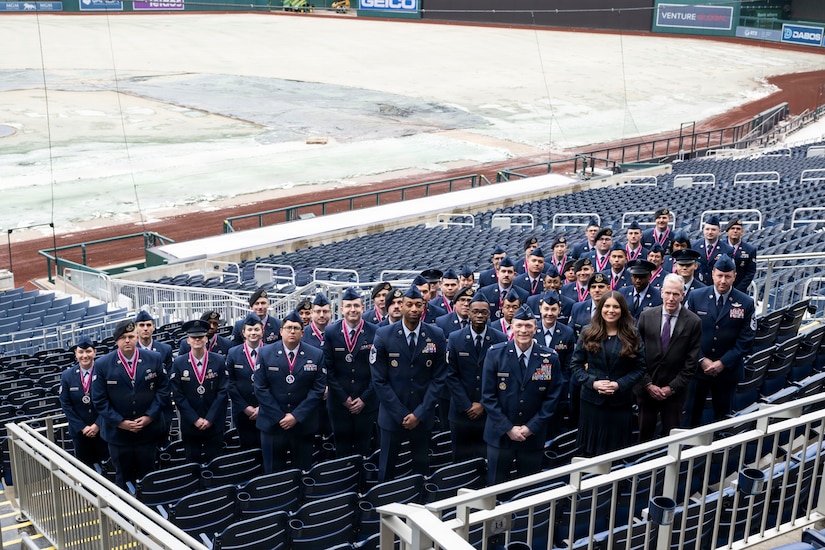
More than a dozen men and women wearing formal military uniforms stand in a stadium, posing for a picture around a man and a woman in business attire. A snow-covered baseball field is in the background.

With the ceremony taking place in a baseball stadium, Wilson used the setting to make her point. "Leadership is not a solo sport," she said, comparing effective supervision to teams that do the basics together: communicate, cover each other and adjust when something goes wrong. 

In a class made up of active-duty service members from 19 career fields and units across seven major commands, Wilson said the details of each job may differ — but the expectations of a noncommissioned officer don't. 

"You are ready for that — not because you're perfect, but because you've been trained, you've been tested, and you've chosen to step forward," she said. 

Before leaving the podium, Wilson thanked the families and friends for standing behind the graduates, then closed with a reminder meant to sound simple — and to be taken seriously. 

"So let me be crystal clear on one last point: you earned this. Congratulations!" she said. "Now go lead."

Tuesday, January 13, 2026

When the Top Stops Talking: The Organizational Cost of Communication Failure Among Senior Influencers

Communication failures among senior influencers represent one of the most damaging yet least visible threats to organizational health. While breakdowns at lower levels often produce immediate operational errors, failures among senior leaders quietly distort meaning, authority, and direction across the entire system. Senior influencers do not merely transmit information; they create coherence. When communication between them deteriorates, organizations experience fragmentation, mistrust, and strategic drift long before measurable decline becomes apparent.

Senior influencers include both formally appointed executives and informal power holders whose experience, credibility, or historical authority shape decisions. Their influence operates vertically and horizontally, affecting how priorities are interpreted and enacted throughout the organization. Because of this positioning, miscommunication among senior influencers carries disproportionate consequences. It signals instability at the source of meaning-making, leaving others to infer intent, fill gaps, or align with perceived power centers rather than shared purpose.

One of the most common causes of communication failure among senior influencers is the substitution of assumptions for dialogue. Leaders often believe shared experience guarantees shared understanding, overlooking the reality that perspectives diverge as roles and incentives evolve. Power dynamics further complicate communication, as senior leaders may withhold dissent to preserve relationships, status, or perceived unity. Over time, difficult conversations are deferred, and indirect communication through intermediaries replaces direct engagement. These patterns foster parallel conversations that fracture leadership alignment while maintaining an illusion of consensus.

The immediate organizational effects of such failures are subtle but corrosive. Middle managers receive inconsistent signals regarding priorities, accountability, and acceptable risk. Decision-making slows as leaders hesitate to act without clear backing, or accelerates in conflicting directions as individuals follow different senior cues. In the absence of clear, unified communication, informal rumor networks emerge, often carrying greater credibility than official messages. This dynamic erodes confidence in leadership coherence and encourages strategic improvisation rather than disciplined execution.

From a cultural perspective, communication failures among senior influencers undermine trust and psychological safety. Employees quickly detect when senior leaders are misaligned, even if disagreements are unspoken. This perception discourages upward communication, as individuals become unsure which messages are welcome or which leader truly holds authority. Factionalism may emerge, with loyalty shifting from institutional values to individual patrons. Over time, cynicism replaces commitment, particularly among emerging leaders who interpret silence and ambiguity as self-protective behavior rather than stewardship.

These dynamics are well explained by Transformational Leadership Theory, which emphasizes the role of leaders in articulating a clear, shared vision and modeling values through consistent behavior. According to Burns and later Bass, transformational leaders align followers by integrating purpose, meaning, and moral authority. When senior influencers fail to communicate effectively with one another, the collective leadership ceases to function transformationally. Vision fragments, values appear situational, and influence becomes transactional, driven by power rather than shared commitment. The organization may retain capable individuals, but it loses the unifying narrative that sustains long-term performance.

Leader-Member Exchange (LMX) Theory further illuminates the damage caused by senior communication failures. LMX focuses on the quality of relationships between leaders and followers, emphasizing trust, respect, and mutual obligation. When senior influencers are misaligned, followers experience inconsistent exchanges, receiving mixed signals about expectations and rewards. High-quality exchanges become unevenly distributed, often based on proximity to specific leaders rather than merit or role clarity. This imbalance reinforces perceptions of favoritism and undermines organizational justice, further weakening engagement and performance.

Strategically, communication failures at the senior level dilute intent and accountability. Strategy becomes interpreted rather than executed, as each leader emphasizes different priorities. Resources are allocated inconsistently, often reflecting internal negotiations rather than strategic logic. When outcomes falter, accountability becomes ambiguous, as no shared narrative exists to explain decisions or assign responsibility. Over time, institutional memory erodes, and continuity is lost as leadership transitions occur without clear alignment or documented rationale.

These failures persist in many organizations because senior leaders are often insulated from corrective feedback. Success can mask early warning signs, while cultural norms may discourage principled disagreement in favor of superficial harmony. Without explicit structures for candid dialogue, senior influencers may lack a shared language for conflict resolution, allowing unresolved tensions to harden into permanent misalignment.

Effective communication among senior influencers requires intentional discipline rather than goodwill alone. It demands regular, direct alignment conversations focused on meaning, not merely updates. Leaders must establish norms that legitimize disagreement while enforcing resolution. Most critically, senior influencers must recognize communication as an act of stewardship. Silence, ambiguity, and inconsistency are not neutral; they are leadership actions with organizational consequences.

Organizations rarely fail because of insufficient talent or information. More often, they fail because those entrusted with influence stop talking to one another when clarity matters most. Restoring communication at the top is therefore not a tactical adjustment, but a moral and strategic imperative.

References

Bass, B. M. (1985). Leadership and performance beyond expectations. Free Press.

Burns, J. M. (1978). Leadership. Harper & Row.

Graen, G. B., & Uhl-Bien, M. (1995). Relationship-based approach to leadership: Development of leader–member exchange (LMX) theory of leadership over 25 years. Leadership Quarterly, 6(2), 219–247.

Hambrick, D. C., & Mason, P. A. (1984). Upper echelons: The organization as a reflection of its top managers. Academy of Management Review, 9(2), 193–206.