by Senior Airman Matthew Lotz
31st Fighter WIng Public Affairs
12/10/2013 - AVIANO AIR BASE, Italy -- The
Aviano Women's Basketball Team took to the court Tuesday night as they
kicked off their season in a match against the 31st Security Forces
Squadron.
With only a two-point loss against the 31st SFS men's over-30 team, this
year's female team hopes to keep the spirit of women's basketball
alive.
"I knew this league (over-30 intramural league) would be tough so that
game was a real confidence booster. The ladies fought hard, never quit
nor complained," said William Smith, Aviano Women's Basketball Team head
coach.
Due to only a few women's basketball teams in the local area, the Aviano
team will compete in the men's over-30 basketball intramural league,
scrimmage local Italian teams, play in three European tournaments and
compete in the Armed Forces Championships.
"Scrimmaging against the Italian teams and playing in the men's league
will help us accomplish our goals this season," said Ashley Pee, Aviano
Women's Basketball Team guard.
Before the team could score their first point, Smith and his assistant
coach, Tech. Sgt. James Byers held a tryout to build a winning team. The
tryouts were rigorous and open to all women stationed at Aviano.
"I feel that conditioning is a huge part of what the ladies will
endure," said Smith. "They were subjected to dribbling, shooting,
defensive and passing drills. These drills gave my assistant and me a
foundation for what we had to work with. We took what the ladies brought
to the table and focused on how they could help one another become a
team."
Smith's end-of-the-year goals for the team consist of more than just holding a championship trophy over his head.
"Winning is great, but it's not what is most important to me," explained
Smith. "As their coach, I hope that at the end of the season they have
improved their skills and overall knowledge of basketball, but also
develop friendships that extend beyond the lines of the basketball
court."
While the coach's goals for the season are simple, the players have a different approach to their season.
"Having fun is mandatory," said Brittany Williams, Aviano women's
basketball team center. "Winning would be a big plus though. It would be
awesome if we could win it all."
Even though the early competition is tough, the team looks to progress
through various scrimmages to prepare for a February tournament hosted
by Aviano over the Martin Luther King holiday weekend.
According to the team, achieving a winning season takes more than just
work on the court, but a commitment to building team spirit off the
court as well.
"Once we can build that camaraderie within the team, you want to win for
the team and you don't want to let them down," said Shannon. "Some
girls don't have family here, but they should know they can find a small
family in the basketball team."
Tuesday, December 10, 2013


Managing stress and anger
By Lesley Lanier
Family Life Program Educator
Working as an educator for the Family Life Program at Joint
Base San Antonio (JBSA), it’s my passion and goal to help Service Members and
their families obtain knowledge and provide family enrichment and resilience
services.
With the holiday season here, being mindful of our anxiety
and stress levels can prepare us for any event that may come along. With family
members and other special guests in our homes, proper planning can arm you
against the uninvited company of stress and anger.
This mindfulness includes being aware of our triggers as
well as our own stress building beliefs. Such triggers can include disrespect,
injustice, lack of control and misinformation. They are usually classified into
four categories: SELF, SITUATIONS, OTHERS and/or a COMBINATION of ANY.
In regards to anger, it’s important that we understand that
anger is what we FEEL not what we DO. Knowing this, we are able to change the
negative thought playing in our head to something positive and realistic. How
many times have you been in argument with someone to where the levels reached a
point in which what you were arguing about in the beginning was no longer the
topic? To prevent this, use “Thought Stopping”. This technique provides the
opportunity to examine your feelings to see if they are caused by the present
situation, or linked to previous situations.
Some steps to manage your anger include:
Admit that all angry expressions, whether they are good or
bad, are the result of choices.
Let go of excessive dependencies so your anger management is
inwardly-directed, rather than externally-determined.
Release your craving for control in exchange for freedom.
Set aside idealistic myths so that you have a foundation in
truths.
Keep your lifestyle habits consistent with your emotional
composure.
Live in humility rather than self-preoccupied pride.
Hold your defenses to a minimum.
Accept the inevitability of loneliness as your struggle to
be understood.
Relate to others as equals.
Pass along to our next generation your insights about anger
and stress.
Avoid rationalizing your anger and be accountable for who
you are.
Be accountable for your own growth & be honest and open
about your anger.
According to the Random House Dictionary, stress is defined
as, “physical, mental, or emotional strain or tension,” and, “a situation,
occurrence, or factor causing this.” The word “stress” actually comes from a
Latin word meaning, “distress.” Stressors can be hard to pinpoint because it is
an individual thing. For me, family gatherings can cause stress – but it may be
one of your great joys in life. With it being known that stress is different for
everyone, your coping technique will be individualized as well.
The most important aspect of stress is the ability to handle
it. Since most stress is self-induced, the ability to handle it rests,
primarily, with the individual. Whether you encounter positive or negative
stress, a way to manage involves understanding the Triple A Approach. With this
approach you can choose to, Alter the situation or your approach to it, Avoid
the situation or Accept the situation. Approaches to relieve stress can be divided
into:
Physical:
Get regular exercise
Improve your diet
Listen to your body
Learn relaxation skills
Get adequate sleep
Social:
Develop a support network
Develop a social life
Volunteer your time
Develop a sense of humor
Relax
Develop hobbies
Mental:
Adopt a new attitude
Increase self-worth
Set realistic expectations
Keep a positive outlook
Improve your communication skills
Get organized
Research shows that if not managed properly, stress and
anger can cause many physical side effects including but not limited to muscle
tension, headaches, high blood pressure, insomnia, depression, obesity and
increased risk of heart attack and stroke. The duration and levels of stress
and anger attained play an important part on the increase of these effects.
Having effective ways to reduce the effects of stress and anger on our body and
mind is important.
In parting, I enjoy ending discussions with a quote. So I
found one that fits my mantra to a “T.”
“The greatest weapon against stress is our ability to choose
one thought over another.”
William James
You can find an abundance of stress and anger management
articles and assessments on-line. Pertaining to this article, resources used
include:
www.stress.org
www.militaryonesource.com
www.helpguide.org
- See more at: http://airforcelive.dodlive.mil/2013/12/managing-stress-and-anger/#sthash.mAAhG7MO.dpuf
Tuesday, November 26, 2013
Develop a study plan that works for you
Editor's Note: Excellent advice for any promotional process.
By Chief Master Sgt. Patrick Edem, 51st Maintenance Group
superintendent
OSAN AIR BASE, South Korea (AFNS) -- The weighted airman promotion season is back; chief master
sergeant promotion testing period has just ended while senior master sergeant,
master sergeant, technical sergeant, and staff sergeant cycles are fast
approaching.
My message, if you don't read any further, is to study for
promotion -- I mean really study for your promotion.
For our enlisted force, this is one thing that always amazes
me; many people just don't study for their Promotion Fitness Exam and Specialty
Knowledge Test. If you observe the average scores for these tests over the
years, the majority hover somewhere around a 55 to 65 percent.
The one thing I have always had in my favor with regards to
promotion is that my peers did not always study, so I thought to myself, why
not use this to my advantage? The strange part about it is that when asking
those not selected for promotion if they studied, most will say they did.
However, when you really peel it back, what they actually did is just read the
Professional Development Guide, orPDG, or glance over their Career Development
Course, or CDC, a few times.
In most cases, this method of "study" in
preparation for any assessment or examination will not be very successful.
Being fully prepared and ready requires more time than just a glance over; you
must digest and absorb the PDG, CDC material and any other career field
requirements to do well.
For me it is best to know the material and know how it
applies. After 26 years I still reference those books to remain well-versed in
my job and as an Air Force professional. Find the method that works for you and
stick to it.
A first step in the right direction may be to set a goal and
develop a plan to tackle it in a way that helps you retain the most information
and understanding. Things like making flash cards, notes, using audio aids,
setting study time/duration and/or changing venue (home, library, community
center) may assist you in staying focused and on course.
Just reading through the books provided will not get it
done. Most of all, you have to commit yourself; this can even be a family
commitment for some.
Personally, every time I prepared for an exam, my wife and
children didn't see much of me, especially at night or on weekends. My family
understood that in order to put a study plan into action and effectively
achieve a goal, I needed to isolate myself in a separate room, or go to the
base library.
To be entirely prepared you must be prompt and reliable with
honesty to yourself in planning, scheduling and execution. Additionally, total
commitment to the mission and your job while simultaneously taking advantage of
this systematic developmental opportunity will go a long way towards ensuring
success.
So think about it, do you want to get promoted, expand your
level of leadership and accept more responsibility? If so, it starts with a
real study plan, one that works for you … and staying devoted to it.
Friday, November 22, 2013
Tinker epitomized Native American strength, leadership
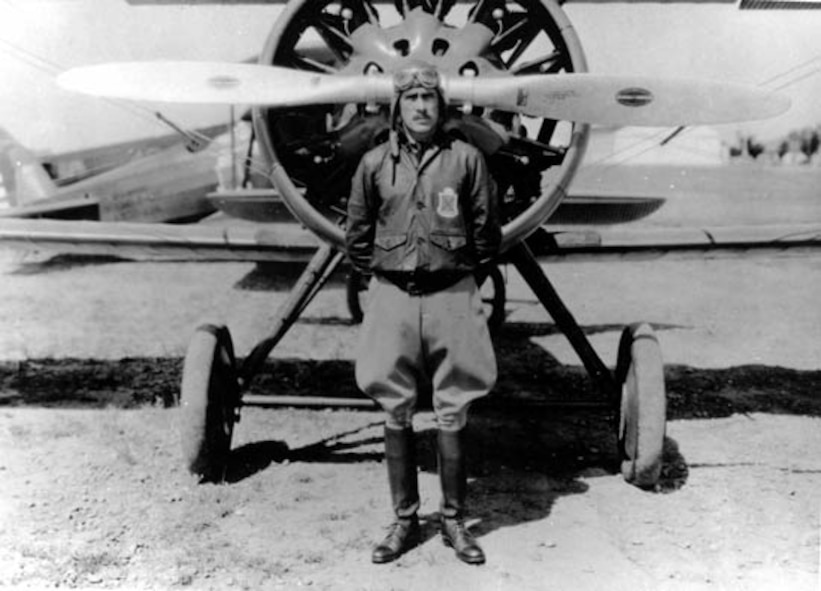 By Randy Roughton, Air Force News Service / Published November 21, 2013
PAWHUSKA, Okla. (AFNS) --The nation’s highest-ranking Native American general didn’t have to be
on the ill-fated mission in the Pacific that took his life in 1942. The
question of why he was always intrigued Dr. James L. Crowder, a
historian and author of “Osage General: Maj. Gen. Clarence L. Tinker.”
So he once asked the question while talking to members of the Osage Nation in Oklahoma.
“We were having a meeting about Osages who served in the military, and I asked them, ‘Why would he do that?’” Crowder said. “All of the key documents from that time showed he didn’t have to be on that mission. They said an Osage leader is never at the back of his band of warriors.”
Tinker, a one-eighth Osage, grew up on the reservation in Pawhuska, Okla. George Edward Tinker, his father, started Osage County’s first newspaper, the Wah-Sha-She News. Even after Tinker became a general, he sometimes called home to talk to his father, just so he could hear his native language.
“So General Tinker was always proud of his Indian heritage,” Crowder said. “In 1906, when they turned the tribe lands into individual holdings after oil was discovered in the Osage Nation, the Osage became the richest tribe in American history. As an alumni member at 19 years of age, General Tinker became quite well-to-do and had a lot more money than many of the officers he served with. He was not one to show off his wealth, although he did like to show off. He was known for coming in the MacDill (Air Force Base, Fla.) officer’s club on a mule with full Indian headdress for the Army-Navy football game. He liked to be the center of attention, yet he was kind of a quiet person, too.”
Crowder describes the general as 5-foot-10 and 150 pounds, with extremely long sideburns he was always proud of.
“(Gen. Henry H.)
Hap Arnold told him several times, ‘Get those sideburns shaved,’”
Crowder said. “He would, as long as Hap Arnold was around. But then he
would just grow them back out.”
Early in his military career, Tinker served with the 25th Infantry Division, originally in Spokane, Wash., and later moved with the division to Hawaii. In 1919, Tinker took an interest in flying, earned his pilot’s license and entered the Army Air Service in 1922. Five years later, he was named the commandant of the Air Service Advanced Flying School at Kelly Field in San Antonio, and later commanded several pursuit and bomber units. In 1940, he pinned on his first star, and, after Pearl Harbor, was named commander of the Army Air Corps’ Hawaiian Air Force, which became the 7th Air Force in February 1942, with Tinker as its first commander. He was promoted to major general a month earlier, just six months before he disappeared over the Pacific. In its announcement of Tinker’s appointment as Hawaiian Air Force commander, Time magazine described Tinker as “a spit-and-polish, sky-ripping flight officer part Osage Indian, flyer since 1920.”
When Tinker assumed command of the Hawaiian Air Force, his father reassured friends in the corner drugstore in Pawhuska, “You can go home and sleep peacefully now. The Tinkers have got the situation well in hand,” he said, according to an article in The Milwaukee Journal on Feb. 14, 1942.
Before Dec. 7, 1941, Tinker warned that the Japanese were the biggest threat instead of Germany, and he thought the Air Force would be the major factor during World War II. He also believed that a long-range attack against Japan would be the key to war in the Pacific. During the spring of 1942, he considered the Japanese on Wake Island as a threat to Midway and Pearl Harbor. However, he didn’t think the B-17 Flying Fortress could make the 1,300-mile trip so he acquired four Consolidated LB-30 Liberators and prepared for an attack on Japanese forces on the island, Crowder said. Tinker, then commander of the Army
Air Forces Hawaiian Department, died with eight crewmembers when their B-24 Liberator disappeared through a formation of clouds over the Pacific Ocean during a long-range mission on Wake Island that he chose to personally lead. He was the first American Army general officer killed in combat during World War II. Oklahoma City Air Depot, the base that had only recently opened, was renamed Tinker Air Force Base.
“His career stretched from the beginning of the Air Force as we know it into World War II,” Crowder said. “He came through that period in the 1930s when the Army Air Corps wasn’t really held in great respect and was very poorly funded. Yet he came through it, and I think he was a very natural pilot.
“The fact that he gave his life in such a dramatic way as commander of the 7th Air Force leading his men, is also important in remembering General Tinker.
“But General
Tinker’s favorite thing was working with young Airmen. He thought the
key was the young men coming up in the military, and he always tried to
give them positive experiences with officers. He was an encourager is a
way anybody could remember him.”
Images and items of Tinker and his career can still be found throughout the base that was named for him more than seven decades since he disappeared over the Pacific. There’s a bust of Tinker in the Air Force Sustainment Center Headquarters, and a painting and a display of his awards and medals greet visitors to the Tinker Club.
But the first seeds of his leadership skills were planted in Tinker’s Osage childhood. His portrait hangs in the chiefs room of the Osage Tribal Museum in Pawhuska, and to this day, the Osage Nation honors him with a song and dance on the final day of their four-day In-lon-shka. The annual celebration emphasizes the culture and values that date back to the 1880s after they moved to their current reservation in Oklahoma. The Tinker family attends each year, with most of the men participating in the dancing.
“We have veteran dances that honor our soldiers,” said Chief John D. Red Eagle, principal chief of the Osage Nation. “My father was a World War II veteran, and we honor him during that time, as our other families honor their soldiers. We talk about when they were in the war because they were very proud to be a part of the military. That’s the way they felt about General Tinker because of his service to the United States as a soldier. It is a big honor to have a song in that dance.”
Master of Motivation works out with Misawa

35th Fighter Wing Public Affairs
11/21/2013 - MISAWA AIR BASE, Japan -- When the Master of Motivation asked the crowd of about 100 Airmen here if they had ever experienced his creation, nearly every hand shot up in the air. It didn't take long for the remaining few to find out what they were in for.
Misawa Airmen showed up to the base fitness center to workout with Tony Horton, the colorful personality who created P90X, for an hour-long fitness session Nov. 20 that even had the walls sweating by the end of it.
"We got put through the ringer," said Airman 1st Class Camille Van Atta, 35th Fighter Wing Command Post controller, "but it was totally worth it."
Horton came to Misawa as part of an Armed Forces Entertainment tour through Asia, making northern Japan his seventh and final stop before heading back to the U.S. It was Horton's second stop in Misawa, having visited in February of 2011.
P90X is a complete 90-day home fitness system with multiple versions, and Horton led Misawa Airmen through a sneak peak workout from his soon-to-be-released series, P90X3. Horton called it "Brand new, fresh ways to feel the pain."
"It was pretty crazy, I didn't know what to expect," said Senior Airman Joseph Matthews, 35th Security Forces Squadron. "Fitness is important, and being in the military we have a standard to uphold every day. Sometimes that means going above and beyond our limits to get things done."
Horton made the workout more of an experience than a chore, pushing people to get better through encouragement, humor and most importantly, example.
"Tony was something else - he's 55 years old and is working out like he's in his 30s," said Matthews. "He was in better shape than anyone else in the gym."
Horton was raised with a military background, traveling fort to fort while his father served as a tank commander in the U.S. Army.
"I'm a big fan of fighter jets and I'm a big fan of this base," said Horton, who has now visited 44 military installations. "This is the military; I don't have to tell any of you what it means to be intense."
Van Atta said she thought about skipping the event because she thought it might be too difficult, but said the interactions with Horton and Airmen made the pain well worth the gain.
"It helped to have someone like [Horton] around to make you want to do things the right way," Van Atta said. "It's not like when you're at home and want to skip out on those last 10 pushups because no one's watching."
Throughout the day, Horton and his team toured the base, took photos with Airmen and signed autographs before and after the workout.
Following the workout, Horton talked with Airmen about fitness and a raffle was held to award one participant a free DVD set of P90X. The winner was Airman 1st Class Jacob Lombardi, 35th Fighter Wing broadcast journalist.
Thursday, November 21, 2013
Four guides to success

673d Communications Squadron
11/21/2013 - JOINT BASE ELMENDORF-RICHARDSON, Alaska -- Just like life, a military career is a journey. As we travel down the road of our career and life, we first need to have one or more destinations in mind. These destinations are the milestones and goals we set for ourselves.
Without something to shoot for, progress is haphazard, slower than it should be, or nonexistent. That can lead to missing out on opportunities, dissatisfaction, or in the worst case an end to our career for not meeting expectations. During my career, my ability to regularly and consistently follow four principles or guides has allowed me to navigate through the challenges to reach many of my professional and life goals.
The four principles are have the right attitude, be better each day, focus on the team, and find a balance
Have the right attitude
We need to approach each day with desire and effort, and in a positive manner.
Treat your career as more than a job; embrace it as a culture. That means following our military's customs and courtesies, perpetuating its traditions, studying its history, and changing it when needed so it doesn't stagnate.
Honor those who came before you, share with those around you, and leave a stronger legacy for those who will continue on after you. The right attitude will see you through the hard times, magnify the good experiences, and enrich your life as a whole.
Attitude is contagious. The wrong attitude is like a weight around your neck or a dark cloud that stretches out over those around you. It may not lead to failure, but at a minimum, it requires additional effort and time by you and others to overcome it.
On the other hand, the right attitude will attract subordinates, peers, friends, and people who care about you to your side. With their help, you can join your abilities together to achieve and enjoy more, rely on each other when times are tough for either of you, and share in the joy of your or their success.
Be better each day
We each have the opportunity to learn something new every day. The key is to take advantage of this opportunity.
I'm not talking about taking a huge leap of knowledge or understanding but smaller, more subtle steps. It may be learning a topic you didn't know before. It may be not repeating a mistake you made yesterday. It may be taking a step outside your comfort zone in order to broaden your experience.
But we need to make small improvements regularly. It's the only way to reach our potential in our current duty position, professional responsibilities, or life. It's the only way to ready ourselves for more responsibility whether it comes with the next rank, with becoming a parent, or assuming a new role. And it's the only effective way to prepare ourselves to be able to manage the unexpected.
The long journey to success begins with a single step. And each step you take should be a purposeful one of gaining knowledge and experience.
Focus on the team
In our military careers, and I'd argue in our lives in general, true success comes not from individual achievement, but from what we accomplish together. It doesn't mean much if you succeed, but your co-workers, section, organization, or family struggles or fails to deliver. Instead of keeping your expertise to yourself so you're the only "go-to" guy or gal, share your strengths with others to widely spread your knowledge and abilities. We can all benefit from sharing with one another the tools and things that work for us.
While I've come up with a few methods on my own, I've borrowed/stolen many more from the mentors, leaders and peers I've been fortunate enough to meet throughout my career. Because of this, my Airmen benefit not only from my strengths and abilities, but also from those of others as well.
Look for areas in processes, programs, and individuals that can be improved. Be a mentor to your subordinates, a wingman to your peers, an advisor to your leaders, and all of the above to your family.
Be honest with yourself and look within to identify areas needing improvement and then take action. Also, keep in mind that teamwork isn't a one-way street. Ask others for their view. It's always good to get an outside opinion.
Be willing to learn from others to bolster your own weaknesses. Ultimately, the more sharing that occurs, the more successful the "team" can be.
Find a balance
This can be the most challenging of the principles due to the diversity and volume of demands on us. You need to find and maintain a balance in the different facets of your life.
Make sure you devote enough time each to your career, your family, your community, and the one too many often forget about, to yourself.
When looking within, develop yourself physically, mentally, emotionally and spiritually. You need to deposit enough in each internal and external "account" so you're able to make withdrawals when needed. Do it frequently enough so none of the accounts reach a zero balance.
If you're able to make these life deposits, you'll minimize the negative impact that can occur when one particular demand dominates your attention and energy to the exclusion of the others.
Any facet in your professional and personal lives to which you don't properly attend will degrade one or more of the others and ultimately hurt your quality of life and those around you.
I encourage you to adjust your attitude, approach, focus and balance as needed. And I hope you willingly share with others what's helped you to reach your own career and life goals so they can benefit from your experiences. We not only owe it to ourselves; we owe it to our families and our fellow Airmen, Soldiers, Sailors, Marines, Coast Guardsmen and civilians of all ranks. It can be the difference between success and failure in our personal and professional lives.
Tuesday, November 19, 2013
Dempsey Addresses U.S. CEOs on Challenges of Leadership
By Jim Garamone
American Forces Press Service
WASHINGTON, Nov. 19, 2013 – Strengthening the standards of
the military profession is a critical mission for the armed services, the
chairman of the Joint Chiefs of Staff said at The Wall Street Journal’s CEO
Council here last night.
John Bussey, a Wall Street Journal assistant managing
editor, interviewed Dempsey for the event.
Competence and loyalty are two necessary attributes, but the
gold standard, Dempsey said, is trust. “You don’t walk out of a forward
operating base in Afghanistan unless you have a level of trust in the man or
woman to your right and left, your leadership, your medics,” he said.
But responsibility and accountability are important as well,
the general told the executives. “There have been missteps recently that we are
trying to overcome -- missteps that I attribute to 10 years of frenetic activity
-- and I think we forgot a little about how we balance character and
competence,” he said.
The chairman stressed that it is not a choice between
character and competence, but a blend of the two. “You don’t want a leader in a
combat zone who is really a man of great character, but can’t fight his way out
of a paper bag,” the general said. “Nor do you want the ultimate warrior god
who isn’t a man of character.”
The chairman was loath to compare military and civilian
leadership, except in one instance.
“I do think there’s something extraordinary about being
given the responsibility for people’s lives,” he said. “That should cause us
all pause and put it in perspective. I’ll accept that as part of our
uniqueness, which gives us some balance of both physical courage and moral
courage that may be unique in our profession.”
The profession of arms has a long and honorable history,
Dempsey noted. “We commit ourselves to an uncommon life, and we accept, by
becoming a member of the profession, to live to a certain ethos,” he said. “In
our case, it is serving the people of the United States and ensuring the common
defense -- or, as I like to put it, keeping the country immune from coercion.”
Part of being a leader in a profession is the need to
encourage education throughout a career, the general said.
“Other than the medical profession, our continuing education
program for leaders in the military is second to none,” he added. “We try to
renew our commitment to being part of a profession at various intervals along
the way.”
But you are not a profession just because you say you are,
the chairman said.
“You have to earn it and re-earn it,” he explained. “And
particularly in our relationship with the American people, we have to continue
to earn it.”
Speed, Safety, Success Through Leadership
by Lt Gen Darren W. McDew
Commander, 18th Air Force
11/19/2013 - Winter 2013/2014 -- Those of us who have sworn
to support and defend our Nation understand that someday we may be called upon
to make the ultimate sacrifice. We accept and understand that responsibility as
an acknowledged risk in service to our country. However, that doesn't mean we
are allowed to be careless with our lives or those of our fellow Airmen.
This year we've had a series of safety mishaps that have
been related to lapses in focus, judgment, and discipline. Some of these
mishaps have been fatal. I view this first and foremost as a leadership issue:
it demonstrates a lack of focus on risk management, operations safety,
training, and standards. We, as leaders, must adjust the focus.
It saddens me to lose any Airman--but especially when it is
to a mishap that could have been avoided. We have the power to do better, but
it requires a collective commitment to bring about real change. Until then,
mishaps will continue with aircraft and equipment needlessly damaged and our
fellow Airmen hurt or killed.
Many people will look for solutions by adding new processes,
procedures, or instructions. However, the real solution is a time-tested
remedy: leadership. If you have a problem with standards--apply more
leadership. Have a problem with unit morale? Apply more leadership. Seeing a
negative safety trend? Apply more leadership! Leadership is a medicine best
applied liberally, regularly, and in person. Be bold in its application.
As leaders, we also understand that we will always face
unexpected events, both natural and manmade, that drive a call from our Nation
which can only be answered by Mobility Airmen. In responding to that call, we
accept some inherent risk; we simply cannot be successful without doing so. In
the mobility world, mission success often depends on a rapid response. But that
doesn't mean we skip steps or ignore standards. Do the mission right!
We need you to take care of each other. We can't afford for
you to become complacent or a statistic. When we lose focus we expose ourselves
and our Wingmen to unnecessary risk. The solution to our challenges is simple:
give our Air Force the strong leadership it needs. Help us strengthen our culture
of excellence. You not only hold the keys but also carry the responsibility to
build tomorrow's Air Force and posture it for success.
It is a heavy responsibility ... but it is one that your
Wingmen, your leaders, and America is counting on you to exercise well. The
implication to all of this is simple: our success depends on bold leaders who
aren't afraid to take intelligent risks to make things better.
I'd ask you to consider how your ideas and innovations can
positively impact our enterprise. Motivate others to find a better way to do
business. I believe to my core that you are the most talented, knowledgeable,
and operationally-ready Air Force we've had in our history. It's not the
aircraft, money, or infrastructure that makes our Air Force strong--it's you!
Subscribe to:
Posts (Atom)


 Posts
Posts

